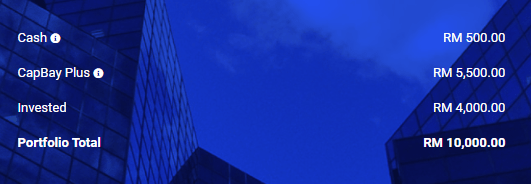
• Skip to primary navigation
  • Skip to main content

Dividend Magic

Saving and Investing towards Financial Independence in Malaysia

  • Facebook
  • Instagram
  • Twitter
  • HomeMain Page
  • Start HereHow to Invest
    • Start Here – Read this First
    • Stock Investing Guide
    • REITs
    • Stock Brokers Comparison
    • US and International Stock Broker Comparison
    • Best Dividend Stocks
    • Dividend and Growth Investing
    • Start Investing
  • My PortfoliosMy Investment Portfolios
    • Freedom Fund
    • US Portfolio
    • Crypto Portfolio
      • Luno Portfolio
      • Binance Portfolio
    • StashAway
    • P2P Lending -CapBay
    • Real Estate Portfolio
    • Dividend Magic’s Yearly Review
    • Dividend Income Updates
      • Dividend Income (Malaysia) Update 2026
      • Dividend Income (Malaysia) Update 2025
      • Dividend Income (Malaysia) Update 2024
      • Dividend Income Update 2023
      • Dividend Income Update 2022
      • Dividend Income Update 2021
      • Dividend Income Update 2020
      • Dividend Income Update 2019
      • Dividend Income Update 2018
      • Dividend Income Update 2017
      • Dividend Income Update 2016
      • Dividend Income Update 2015
      • Dividend Income Update 2014
  • Personal FinanceFI/RE & Savings
    • FI/RE Guide
    • Is the First RM100K the Hardest?
    • How Personal Finance and Frugality Built My Portfolio
    • Passive Income
    • Emergency Fund Guide
    • The 7 Stages of Financial Independence
    • Free Basic Financial Plan for Malaysians
  • About MeAbout page
    • About Me
    • Dividend Magic Recommends
    • Hire Me

Blog

Binance – Crypto Savings and Staking

By Leigh
Updated May 23, 2021 Filed Under: Investment, Cryptocurrencies 8

binance dividendmagic referral

So I’ve recently sold about RM20,000 worth of bitcoins. It was just sitting in my Luno account for a month or so as MYR because I did not know what to do with it. I have since moved that amount to Binance. I converted to XRP and then transferred it to Binance.

At the same time, I was also doing my research on DeFi and staking. A really good place to start if you’re looking into this is CoinGecko’s book – How to DeFi. It took me a few days to get through the whole book the first time, and another few days for me to kinda-sorta understand it. And even now, I think I’ve barely scratched the surface. If you guys have other recommended readings, please do share them with me.

My Crypto Portfolio on Binance

Space reserved for updates.

Binance vs Coinbase

So my interest is actually in staking my coins. I don’t like my assets to just sit there and staking actually generates a lot of returns in the form of interest. So I had to look for platforms that supported staking and savings. In the end, it boiled down to Binance and Coinbase, I went with Binance mainly because they’re the biggest and the cheapest.

Is Binance Safe?

Some of you may remember the Binance hack back in 2019. The company actually absorbed the losses sustained then and no users were affected.

Another one of my concerns with Binance was with China. Binance was founded in China but they’ve since taken measures. Their servers were moved to Japan back in 2017 and they’re now headquartered in the Cayman Islands.

What I Did on Binance

As mentioned earlier, I had about RM20,000 of Bitcoin profits sitting in my Luno account. I decided to move this amount to Binance to try out its savings and staking. I wanted to move my funds with the lowest possible fees and decided to move it using XRP. Bought the maximum amount of XRP in Luno, moved the funds to Binance, and then converted my XRP to USDT.

The total transfer cost of XRP? 0.8313165. Which translates to about RM4?

As you can see, I’m holding 3,811 USDT right now and earning 5.80% p.a. using Binance’s savings feature

Earning Interests on my Crypto

Savings

So the safest of all the various forms of earning a return on your coins is Savings. Of which there are two types – Locked Savings and Flexible Savings.

An example would be Bitcoin’s savings. You stand to earn 1.2% p.a. Which isn’t too bad considering I’ve been earning zilch previously.

Another personal example of mine is my USDT Savings which is currently netting me 5.80% p.a.

Staking

I’ve yet to actually stake my coins but I’m really looking into it. Right now, there’s a sort of first come first serve situation with the more popular coins.

So, what is staking?

Staking is the process of actively participating in transaction validation (similar to mining) on a proof-of-stake (PoS) blockchain. On these blockchains, anyone with a minimum-required balance of a specific cryptocurrency can validate transactions and earn Staking rewards. 

– Coinbase

For example, for USDT, the interest rate for staking is almost double its savings rate at 10.67%. But it is sold out.
I’ll definitely be selling my USDT at some point to invest in other coins and then staking them. Updates will be done on this same page so keep an eye out.

The Risks of Savings and Staking

As we are all too familiar with, the higher the risk, the higher your potential reward. Naturally, that means staking carries a higher risk when compared to savings.

One risk that both savings and staking share is the risk of the value of your coin falling. If that particular coin experiences a huge drop, all interests earned will be wiped out.

Savings and Staking are very new in the world of finance and cryptocurrencies. Essentially, you’re lending your coins out to a process.

Usually, in Savings, your coin is loaned out to a holding company that then lends it to its various clients. These clients may want to borrow cryptocurrency for financial trades or for arbitrage.

In Staking, your tokens are used in its respective verification process. By helping out the network, you earn a reward.

A key thing to remember – Do not risk your whole stack of coins. Not in savings and not in staking. Don’t risk what you can’t afford to lose.

Sign Up

If you’re looking to sign up with Binance and explore the world of DeFi, use the link or manually enter my code: GGRMJQWA

You get a small 5% kick back and discount on fees when you make transactions there.

End.

I’m moving a relatively small portion of my crypto portfolio from Luno to Binance. Luno is still where the bulk of my portfolio will be held as it is the safest for me as a Malaysian.

The main reason for testing out Binance is to try out their savings and staking. If you’re new to cryptocurrencies and looking for a place to start, my advice is to stick with Luno as a Malaysian. Safety will be the biggest priority. My review and my cryptocurrency portfolio on Luno can be found hERE.

Risks, risks, risks

There are huge. huge risks to investing in cryptocurrencies. Even more when you’re moving them out of Malaysia’s regulatory space and into unknown, literal international waters. You then further risk it by staking/savings said coins. So please, understand the risks you’re taking before taking the dive.

The above being said, I’m extremely excited right now and I feel like a kid all over again dabbling in a whole new world of finance. I’m still very new at this and would love to hear from experts or anyone with more experience with this.

Onwards and upwards!

Share this:

  • Share on Facebook (Opens in new window) Facebook
  • Share on X (Opens in new window) X
  • Share on Reddit (Opens in new window) Reddit
  • Email a link to a friend (Opens in new window) Email
  • Share on WhatsApp (Opens in new window) WhatsApp
  • Share on LinkedIn (Opens in new window) LinkedIn

A Review of CapBay – P2P Lending in Malaysia

By Leigh
Updated November 21, 2025 Filed Under: FI/RE, Investment Portfolio, Other Investments 13

CapBay Malaysia Review Dividend Magic

Table of Contents

  • CapBay Referral Code (RM100)
  • CapBay Portfolio Update
    • November 2025
    • September 2024
    • July 2023
    • Nov 2022
    • June 2022
    • May 2022
    • January 2022
    • September 2021
  • The P2P Lending Scene in Malaysia
    • Types of Loans – Business Term vs Invoice Financing
  • Why CapBay?
    • How CapBay Works
    • Simple Steps to Get Started
    • You’ll need RM10,000 to start
  • Registration
  • CapBay Referral Code
  • End.
    • My Portfolio
    • Risks of P2P

CapBay Referral Code (RM100)

If you’re signing up and registering with CapBay, don’t forget to use my code and link for a free RM100. To qualify, you’ll have to make the RM10K deposit and select one of the Auto Invest profiles (Conservative, Moderate and Aggressive). The full terms and conditions can be found here.

Register hERE.
Use my code: DIVMAGIC

CapBay Portfolio Update

An important note: First started investing in May 2021.

November 2025

View this post on Instagram

It’s been a bit more than a year since my last P2P update with CapBay.

Annualised return: 4.8%
Total return: 35.2%
Total net profit: RM3,518.64

I’ve switched to a conservative auto invest profile. This has decreased default rates significantly but returns have also dropped.

Default rates are getting better at only 0.14% now. Annualised returns on the other hand have dropped to 4.8% pa.

I’ll continue to leave my money in there and let it roll, 4.8% isn’t bad at all considering risks have dropped considerably. If this is the mid point, I’m happy to leave my money and even add more here.

CapBay is also having a few promotions on and off recently so if you’re looking to start investing, make sure to capitalise on that. Also, my code: DIVMAGIC, for an additional RM100.

Register hERE.
Use my code: DIVMAGIC

If you’d like to read about my stock investments, my Freedom Fund can be found here.

September 2024

View this post on Instagram

Unfortunately, we’ve been hit with a default this time around.
RM1,305.68 to be exact. Of that RM1.3K, CapBay has managed to recover RM552.94.

On a brighter note, returns are not too bad – we’re at 7% annualised return. In total, I put in RM10K, and I got RM2K back, invested since May 2021.

July 2023

View this post on Instagram

No defaults yet on my side and it’s amazing that the portfolio has been maintaining 11.1% for like.. forever. I’m going to check how this is calculated or if it is a bug..

As I only put in RM10,000 so far, since May 2021, this comes up to 17.95% returns in 2 years.

Nov 2022

View this post on Instagram

Still happy with CapBay!

CapBay is also having a few promotions on and off recently so if you’re looking to start investing, make sure to capitalise on that. Also my code above for an additional RM100.

I’ll be adding in a little more money the next time they have a promo.

June 2022

View this post on Instagram

I’m pretty happy and satisfied with CapBay. With the markets in turmoil, CapBay is the one that outshines my other investments for the year at an 11% annual return. A little lower of course once you take into account the fees.

CapBay is also having a few promotions on and off recently so if you’re looking to start investing, make sure to capitalise on that. Also my code above for an additional RM100.

May 2022

View this post on Instagram

Many of you have been asking for an update on my P2P lending portfolio on CapBay. The good news is that there are still zero defaults! And the even greater news is that the annual return is still above 10% right now.

I prolonged the update a little because this month marks the 1 year anniversary of my investment in CapBay. We put in RM10K back in May 2021. And now, we’ve got a net return of RM780.51. That is a 7.8% return. Not too shabby compared to the markets now.

In light of the decent returns and zero defaults, I’ll be placing another RM10K into CapBay. I wish I could spare a little more but I don’t want to spread myself too thin.

If you’re thinking of giving CapBay a try, register hERE.
Use my code: DIVMAGIC and get RM100 for freeee.

Read on for the step-by-step guide to register and how to choose your portfolios.

January 2022

View this post on Instagram

I invested RM10,000 in CapBay back in May 2021. The first update (as below) was in September 2021 in which I got RM262.77 back, amounting to a 2.62% ROI in 5 months.

Fast forward to January 2022, from the same RM10K in investment, we’ve got a net return of RM525.15. That’s a 5.25% return in 8 months.

Not sure if we’ll be able to reach 10% in returns at the end of one year. But we’ll check back again in May 2022! Still pretty happy with the returns AND of course, no bloody defaults.

If you’re thinking of giving CapBay a try, register hERE.
Use my code: DIVMAGIC and get RM100 for freeee.

Read on for the step-by-step guide to register and how to choose your portfolios.

September 2021

View this post on Instagram

I invested RM10,000 in CapBay back in May 2021. Here’s how the portfolio is doing almost 5 months after.

I’ve gotten back RM262.77 which was of course reinvested again. That comes up to about 2.62% ROI in 5 months. It does seem a little low right now but bear in mind that due to the nature of financing, it’ll take a few months for each note to mature. We’re looking at an average time period of 6 months per note. Below is an example of a note that took about 2 months to mature.

For now, I’m happy with the 2% return in 5 months. And I’ll probably keep the money in for 1 year or maybe 2 then re-evaluate CapBay’s performance.

The best part, however, is the zero defaults so far. That has always been a concern when investing in P2P lending. With no defaults in 5 months, I’ll be continuing with CapBay for the foreseeable future.

The P2P Lending Scene in Malaysia

I’ve been receiving inquiries on and off on what P2P platform I’m currently in. And if you’ve been reading the blog for a while, you’d know I had some money in Funding Societies. However, due to their increasing defaults, I’ve pulled out most of my capital.

Over the past few months, I’ve been looking to re-invest in the sector. I’m on the lookout for lower risks and default rates, somewhere my money can grow steadily at a reasonable rate of return. Which lead me to CapBay.

Types of Loans – Business Term vs Invoice Financing

During P2P’s infancy days, the loans offered by most platforms consisted of mainly business term loans. Which is, of course, the essence of P2P financing i.e. You lend money directly to businesses for a fixed period, typically between 12 to 36 months.

However, it is when the defaults came in that investors realized just how risky it was to hand out loans willy-nilly. And of course, the importance of really diversifying and not putting your capital into a few loans. Instead, when it comes to P2P financing, diversifying over many loans is advisable.

Fortunately for me, my returns today are still in the positive region. I’ve almost withdrawn 100% of my capital with a net return of 10+% per annum.

Right now, I’m looking to get back into the P2P scene as the industry as a whole matures. And I’m looking to lower my default risk by going for primarily Invoice Financing. There is lower risk here because investors are essentially lending money in the short term to SMEs based on a transaction.

In short, when an SME sells their services to a buyer on credit, they often must wait up to 6 months to get their payment. Invoice Financing allows these SMEs access to upfront payment. With Invoice Financing, the SME has already made the sale and the risk of default is actually transferred to the corporate buyer. Typically, Invoice Financing is for the short term, you’ll normally see a loan term of not more than 6 months.

Why CapBay?

CapBay specializes in providing Invoice Financing to SMEs who supply to blue-chip companies and government-related entities. Among the few P2P players in Malaysia, CapBay currently has had no defaults SO FAR since their launch in February 2020. This is no easy feat and caught my attention right away and got me digging for more info about them.

As reported by Fintech News Malaysia, CapBay is the fastest platform to hit RM100 million in P2P Financing. Typically, fast growth leads to problems with risk. The fact that they’ve managed to achieve this growth while still maintaining a 0% default rate is impressive.

How CapBay Works

CapBay works a little differently from the platforms I’ve used. They’re encouraging ”Auto-investing” whereby you let the platform pick the loans to invest in. As you all know, I’m a big fan of automating investments and so I will be using their Auto Invest feature all the way.

You choose from 3 different Auto Invest Profiles based on their respective risk profiles and potential return – Conservative, Moderate and Aggressive. If however, you want to have better control of your capital, you can choose to customize.

Within these 3 different profiles, you’ll find a further 3 categories of notes:
1. Select: Safer and lower return notes
2. Motor: Dealer financing notes
3. Diversified: Riskier and higher return notes

There’ll be a section for you to read up on these on the platform itself.

Another thing to note: Your uninvested funds will earn an estimated 1.7% per annum. This is a special feature called CapBay Plus that ensures you continue to generate returns on uninvested funds if you utilize their Auto Invest.

Simple Steps to Get Started

CapBay Registration P2P

You’ll need RM10,000 to start

This one here got me thinking a little and I know RM10,000 is a huge amount to start with for many, myself included. But after looking at the 0% default rate for a year, as well as the expected net return of up to 10% per annum on their investment opportunities, I’ve decided to go ahead. I’ll be posting updates on the performance here, probably on a regular basis.

Registration

CapBay Registration

Registration took me about 5 minutes. All the usual KYC are required. I.e. pics of your IC and a 5-sec video upload.

If you don’t have a webcam, make sure you download the app and register there as you’ll need to upload a video during registration as part of their KYC requirements.

CapBay Referral Code

And finally, if you’re signing up and registering with CapBay, don’t forget to use my code and link for a free RM100. To qualify, you’ll have to make the RM10K deposit and select one of the Auto Invest profiles (Conservative, Moderate and Aggressive). The full terms and conditions can be found here.

Register hERE.
Use my code: DIVMAGIC

End.

My Portfolio

CapBay Registration P2P

I’ve added in RM10,000 to the Auto-Invest feature and selected the Aggressive profile.

This image has an empty alt attribute; its file name is image.png

The Auto-Invest feature was quick and my funds are 40% invested in a few days. Returns range from 7.3% to 9.7% currently.

Look forward to future updates to my P2P portfolio.

Risks of P2P

Please understand that I consider P2P investing a high-risk venture. Even with CapBay’s focus on Invoice Financing, I still consider this to be a risky investment. But how else can you expect a potential net yield of up to 10% per annum.

This is why I’ve been doing a lot of research and looking around the Malaysian market. I’ll be testing the waters with CapBay and will let everyone know how it goes via my updates.

Share this:

  • Share on Facebook (Opens in new window) Facebook
  • Share on X (Opens in new window) X
  • Share on Reddit (Opens in new window) Reddit
  • Email a link to a friend (Opens in new window) Email
  • Share on WhatsApp (Opens in new window) WhatsApp
  • Share on LinkedIn (Opens in new window) LinkedIn

Dividend Income Update 2021

By Leigh
Updated January 9, 2022 Filed Under: Dividends 4

Dividend Magic Dividend Income Update

A list of my past dividend income and updates can be found below:

  • Dividend Income Update 2020
  • Dividend Income Update 2019
  • Dividend Income Update 2018
  • Dividend Income Update 2017
  • Dividend Income Update 2016
  • Dividend Income Update 2015
  • Dividend Income Update 2014
  • Where it all started – April 2014

December

View this post on Instagram

A post shared by Dividend Magic (@dividendmagic)

Freedom Fund as of December 2021
Dividend Income (Dec) –  RM140
Dividend Income (2021) –  RM15,595.07
Dividend Yield – 3.80%

A little change in dividend yield from last month’s as I made a mistake with my gross investment.

As always, Facebook, Instagram, and now ! Follow, keep up to date. I use Rakuten Trade as my broker.

Acquisition and Disposals

Nil.

Nestle (M) Berhad

December 2021 Dividends – RM140
December 2020 Dividends – RM464
Total 2021 Dividends –  RM140
Dividend Yield – 3.47%

November

View this post on Instagram

A post shared by Dividend Magic (@dividendmagic)

Freedom Fund as of November 2021
Dividend Income (Nov) –  RM748.54
Dividend Income (2021) –  RM15,455.07
Dividend Yield – 3.84%

As always, Facebook, Instagram, and now ! Follow, keep up to date. I use Rakuten Trade as my broker.

Acquisition and Disposals

Nil.

Thong Guan Industries Berhad

November 2021 Dividends – RM125
November 2020 Dividends – N/A
Total 2021 Dividends –  RM437.50
Dividend Yield – 1.23%

Axis REIT

November 2021 Dividends – RM230.92
November 2020 Dividends – RM211.47
Total 2021 Dividends –  RM889.59
Dividend Yield – 5.12%

IGB REIT

November 2021 Dividends – RM392.62
November 2020 Dividends – RM701.47
Total 2021 Dividends –  RM1,975.28
Dividend Yield – 3.81%

October

View this post on Instagram

A post shared by Dividend Magic (@dividendmagic)

Freedom Fund as of October 2021
Dividend Income (Oct) –  RM2,368.25
Dividend Income (2021) –  RM14,706.53
Dividend Yield – 3.52%

As always, Facebook, Instagram, and now ! Follow, keep up to date. I use Rakuten Trade as my broker.

Acquisition and Disposals

Sold PetGas for a small 5% profit as I look to consolidate and streamline my portfolio and hold more cash on hand.

Tenaga Nasional Berhad

October 2021 Dividends – RM880
October 2020 Dividends – RM660
Total 2021 Dividends –  RM3,200
Dividend Yield – 6.78%

QL Resources Berhad

October 2021 Dividends – RM138.25
October 2020 Dividends – N/A
Total 2021 Dividends –  RM138.25
Dividend Yield – 0.56%

Nestle (M) Berhad

October 2021 Dividends – RM140
October 2020 Dividends – RM140
Total 2021 Dividends –  RM324
Dividend Yield – 2.42%

Malayan Banking Berhad

October 2021 Dividends – RM777.84
October 2020 Dividends – N/A
Total 2021 Dividends –  RM2,177.18
Dividend Yield – 10.28%

Sunway Berhad

October 2021 Dividends – RM86.53
October 2020 Dividends – N/A
Total 2021 Dividends –  RM216.33
Dividend Yield – 1.86%

CBIP Berhad

October 2021 Dividends – RM280
October 2020 Dividends – RM280
Total 2021 Dividends –  RM560
Dividend Yield – 2.51%

September

View this post on Instagram

A post shared by Dividend Magic (@dividendmagic)

Freedom Fund as of September 2021
Dividend Income (Sept) –  RM1,374.98
Dividend Income (2021) –  RM12,338.28
Dividend Yield – 2.96%

As always, Facebook, Instagram, and now ! Follow, keep up to date. I use Rakuten Trade as my broker

Acquisition and Disposals

N/A

Petronas Gas

September 2021 Dividends – RM160
September 2020 Dividends – N/A
Total 2021 Dividends –  RM160
Dividend Yield – 1.02%

Public Bank Berhad

September 2021 Dividends – RM525
September 2020 Dividends – N/A
Total 2021 Dividends –  RM1,435
Dividend Yield – 5.90%

Sunway REIT

September 2021 Dividends – RM462.98
September 2020 Dividends – RM515.66
Total 2021 Dividends –  RM686.67
Dividend Yield – 1.48%

IGB Berhad

September 2021 Dividends – RM227
September 2020 Dividends – RM227
Total 2021 Dividends –  RM454
Dividend Yield – 4.30%

August

View this post on Instagram

A post shared by Dividend Magic (@dividendmagic)

Freedom Fund as of August 2021
Dividend Income (Aug) –  RM675.39
Dividend Income (2021) –  RM10,963.30
Dividend Yield – 2.63%

As always, Facebook, Instagram, and now ! Follow, keep up to date. I use Rakuten Trade as my broker

Acquisition and Disposals

Added 1,000 units of Petronas Gas to my portfolio at RM15.68 per share.

At the point of purchase, PetGas’ dividend yield was really attractive and I’m hoping they continue with the same payout for the foreseeable future. I am also aware of the risk of investing in a GLC in Malaysia, I’ll monitor the company a little more closely.

Axis REIT

August 2021 Dividends – RM226.31
August 2020 Dividends – RM203.28
Total 2021 Dividends –  RM687.67
Dividend Yield – 3.79%

IGB REIT

August 2021 Dividends – RM449.08
August 2020 Dividends – RM207.01
Total 2021 Dividends –  RM1,582.66
Dividend Yield – 3.05%

July

Freedom Fund as of July 2021
Dividend Income (July) –  RM1,387.50
Dividend Income (2021) –  RM10,287.91
Dividend Yield – 2.46%

A total of RM1,387.50 in dividend income for July.

Thoughts

Really thankful for the dividends I’ve been receiving throughout this damn pandemic. They’ve been keeping me alive for the most part. My active income was slashed by almost 80-90% especially during the full lockdown. Passive income was what was keeping my head afloat.

I’d also like to apologize to readers for the slow updates of late. I’ve been really busy keeping my businesses from going under. This should all be over soon and hopefully, we can all go back to how things were. Looking to write more often and regularly soon.

As always, Facebook, Instagram, and now ! Follow, keep up to date. I use Rakuten Trade as my broker

Acquisition and Disposals

Nil.

Scientex Berhad

July 2021 Dividends – RM1,200
July 2020 Dividends – RM1,180
Total 2021 Dividends –  RM2,344
Dividend Yield – 4.25%

View this post on Instagram

A post shared by Dividend Magic (@dividendmagic)

Thong Guan Industries Berhad

July 2021 Dividends – RM187.50
July 2020 Dividends –
Total 2021 Dividends –   RM312.50
Dividend Yield – 0.88%

June

Freedom Fund as of June 2021
Dividend Income (June) –  RM1,040.65
Dividend Income (2021) –  RM8,900.41
Dividend Yield – 2.13%

A total of RM1,040.65 in dividend income for June.

Times are tough for everyone now and my income has been negatively affected by the prolonged lockdown in our country. The dividends from my portfolio are keeping me afloat right now. I guess this is why people always say cash flow is important.

As always, Facebook, Instagram, and now ! Follow, keep up to date. I use Rakuten Trade as my broker

Acquisition and Disposals

Sold off all MYEG.

Malayan Banking Berhad

June 2021 Dividends – RM1,040.65
June 2020 Dividends –
Total 2021 Dividends –  RM1,399.34
Dividend Yield – 6.80%

.

May

Freedom Fund as of May 2021
Dividend Income (May) –  RM1,497.86
Dividend Income (2021) –  RM7,859.76
Dividend Yield – 1.88%

A total of RM1,497.86 in dividend income for May. That is about a 71% decrease in dividends compared to May last year.

Acquisition and Disposals

Sold off all my DPHARMA.

Axis REIT

May 2021 Dividends – RM210.55
May 2020 Dividends – RM198.67
Total 2021 Dividends –  RM432.36
Dividend Yield – 2.49%

IGB REIT

May 2021 Dividends – RM442.07
May 2020 Dividends – RM645.75
Total 2021 Dividends –  RM1,133.58
Dividend Yield – 2.19%

Duopharma Biotech Berhad

May 2021 Dividends – RM381.24
May 2020 Dividends – N/A
Total 2021 Dividends –  RM381.24
Dividend Yield – 2.59%

Nestle (M) Berhad

View this post on Instagram

A post shared by Dividend Magic (@dividendmagic)

May 2021 Dividends – RM184
May 2020 Dividends – RM280
Total 2021 Dividends –  RM184
Dividend Yield – 1.38%

CB Industrial Product Berhad

May 2021 Dividends – RM280
May 2020 Dividends – RM280
Total 2021 Dividends –  RM280
Dividend Yield – 1.26%

April

Freedom Fund as of April 2021
Dividend Income (Apr) –  RM2,460.20
Dividend Income (2021) –  RM6,361.90
Dividend Yield – 1.47%

A total of RM2,460.20 in dividend income for April. That is about a 46% increase in dividends compared to April last year.

As always, Facebook, Instagram, and now ! Follow, keep up to date. I use Rakuten Trade as my broker.

Acquisition and Disposals

Nil.

Tenaga Nasional Berhad

View this post on Instagram

A post shared by Dividend Magic (@dividendmagic)

April 2021 Dividends – RM2,320.00
April 2020 Dividends – RM1,400.00
Total 2021 Dividends –  RM2,320.00
Dividend Yield – 4.92%

Sunway Berhad

View this post on Instagram

A post shared by Dividend Magic (@dividendmagic)

April 2021 Dividends – RM129.80
April 2020 Dividends – RM389.39
Total 2021 Dividends –  RM129.80
Dividend Yield – 1.11%

In addition to the normal dividends, I also received RM10.40 in preferential dividends from SUNWAY-PA.

March

Freedom Fund as of March 2021
Dividend Income (Mar) –  RM1,582.50
Dividend Income (2021) –  RM3,901.70
Dividend Yield – 0.92%

A total of RM1,582.50 in dividend income for March. That is about a 138% increase in dividends compared to March last year.

As always, Facebook, Instagram, and now ! Follow, keep up to date.

Acquisition and Disposals

Nil.

Axis REIT

March 2021 Dividends – RM221.81
March 2020 Dividends – RM112.59
Total 2021 Dividends –  RM221.81
Dividend Yield – 1.28%

IGB Berhad

View this post on Instagram

A post shared by Dividend Magic (@dividendmagic)

March 2021 Dividends – RM227
March 2020 Dividends – RM227
Total 2021 Dividends –  RM227
Dividend Yield – 2.15%

Sunway REIT

View this post on Instagram

A post shared by Dividend Magic (@dividendmagic)

March 2021 Dividends – RM223.69
March 2020 Dividends – RM306.82
Total 2021 Dividends –  RM223.69
Dividend Yield – 0.48%

Public Bank Berhad

View this post on Instagram

A post shared by Dividend Magic (@dividendmagic)

March 2021 Dividends – RM910
March 2020 Dividends – RM560
Total 2021 Dividends –  RM910
Dividend Yield – 3.74%

February

Freedom Fund as of February 2021
Dividend Income (Feb) –  RM691.51
Dividend Income (2021) –  RM2,319.20
Dividend Yield – 0.92%

A total of RM691.51 in dividend income for February. That is about a 17% increase in dividends compared to February last year.

As always, Facebook, Instagram, and now ! Follow, keep up to date.

Acquisition and Disposals

Bought a little more Scientex. Sold Dsonic and GenM.

IGBREIT

View this post on Instagram

A post shared by Dividend Magic (@dividendmagic)

February 2021 Dividends – RM691.50
February 2020 Dividends – RM590.53
Total 2021 Dividends –  RM691.50
Dividend Yield – 1.33%

January

Freedom Fund as of January 2021
Dividend Income (Jan) –  RM1,627.69
Dividend Income (2021) –  RM1,627.69
Dividend Yield – 0.37%

A total of RM1,627.69 in dividend income for January.

Scientex came in higher compared to Jan last year. Maybank’s dividend is all over the place so there’s no comparing to 2020 right now. And Thong Guan gave me a measly 0.35% yield so far.

I’ll be looking at how the rest of the year go but it isn’t too bad of a start.

As always, Facebook, Instagram, and now ! Follow, keep up to date.

Acquisition and Disposals

No transactions made in the month of January.

SCIENTEX BERHAD

View this post on Instagram

A post shared by Dividend Magic (@dividendmagic)

January 2021 Dividends – RM1,144
January 2020 Dividends – RM1,030
Total 2021 Dividends –  RM1,144
Dividend Yield – 2.81%

Malayan Banking Berhad

View this post on Instagram

A post shared by Dividend Magic (@dividendmagic)

January 2021 Dividends – RM358.69
January 2020 Dividends – RM /-
Total 2021 Dividends –  RM358.69
Dividend Yield – 1.78%

Thong Guan Industries Berhad

January 2021 Dividends – RM125
January 2020 Dividends – RM /-
Total 2021 Dividends –  RM125
Dividend Yield – 0.35%

Share this:

  • Share on Facebook (Opens in new window) Facebook
  • Share on X (Opens in new window) X
  • Share on Reddit (Opens in new window) Reddit
  • Email a link to a friend (Opens in new window) Email
  • Share on WhatsApp (Opens in new window) WhatsApp
  • Share on LinkedIn (Opens in new window) LinkedIn

Dividend Magic’s Yearly Review

By Leigh
Updated February 9, 2022 Filed Under: Financial Independence, FI/RE, Investment Portfolio 0

I’ll be using this anchor page to keep track of my overall investment portfolio. Updated yearly so I’ll be able to track and show a yearly gain/loss.

Moving forward, I’ll aim to keep my recording simple and clear-cut. So I’ll be able to track my yearly gain more easily. No more IRR, just simple yearly gain, including fresh capital and dividends reinvested.

The Year 2021

It has been a turbulent year. In terms of my portfolio, it has more or less stayed the same, which I am grateful for. The first half of 2021 saw prices plunge and then go up again in the latter part of the year.

My dividends have also increased ever so slightly to RM15,595.07 per annum in 2021. This is despite me having a smaller portfolio compared to 2020. Which is a win. Still, a long way to go to RM36K a year in dividends.

I’ve also managed to maintain a respectable savings rate in 2021 despite a drop in my income. Got a sizeable war chest ready to be deployed and I’m keeping an eye on a few local stocks as well as US ones. It has been a while where the Freedom Fund has been stagnant around the RM500K mark.

On the other hand, my crypto portfolio almost doubled in value from a year ago, this is after factoring in the huge year-end dip. I’ve also been consistent in putting money into my StashAway account. Returns have dropped compared to last year, but in the long run, I’m confident. My US portfolio has seen a drop come year-end, but we’re still positive.

My Investments

The Freedom Fund

Market value: RM501,858.09
Cash: RM100K
Dividends: RM15,595.07
Dividend yield: 3.33%

The Freedom Fund (US)

View this post on Instagram

A post shared by Dividend Magic (@dividendmagic)

Crypto Portfolio

Gross investment: RM10,273
Market value: RM67,004
Capital gain: +552.23%

StashAway

Dividend Magic – Risk (36% Risk Index)
Gross Investment – RM48,000.01
Current Value – RM48,575.13
Time-weighted return – 10.19%
Money-weighted return – 2.79%

Dividend Magic US – Risk (30% Risk Index)
Gross Investment – RM10,000.00
Current Value – RM11,433.23
Time-weighted return – 14.33%
Money-weighted return – 14.33%

StashAway Simple
Gross Investment – RM4,500.00
Current Value – RM4,769.28

TOTAL
Gross Investment – RM62,500
Current Value – RM64,777.64
Gain/Loss: +3.64%

My Overall Investment Portfolio

Freedom Fund: RM601,858.09
Crypto: RM67,004
StashAway: RM64,777.64
Total: RM733,639.73

Goals for 2022

I will focus on getting my dividends up. I’ll be adding more positions throughout the year. I’m looking at you Scientex!

Also, will be looking to do a monthly DCA into Vanguard’s S&P 500 ETF. As of now, I’ll be purchasing it through Rakuten Trade until a better brokerage becomes available.

The Year 2020

What a year it has been. My portfolio tanked in March when Covid hit. It even went into the red, a first for me. I missed the glove boat.

Bet on the recovery and my portfolio managed to sail through 2020 with an almost 10% gain y-o-y. As the portfolio increases in value and diversification, long gone are the days of 15-20% capital gains. I’ll be aiming to rebalance and refocus my portfolio next year. Cutting underperforming stocks and adding more winners.

I’ll also be focusing on my US portfolio moving forward. I’ve also made a decision to keep my US portfolio hidden to maintain some form of privacy. Don’t worry you’ll still be able to view it in percentage (%) form.

My Investments

The Freedom Fund

Market value: RM545,778.21
Cash: RM46,350.83
Dividends: RM15,415.64
Dividend yield: 3.33%

The Freedom Fund (US)

View this post on Instagram

A post shared by Dividend Magic (@dividendmagic)

Crypto Portfolio

Gross Investment: RM13,808
Market Value: RM34,424
Capital Gain/Loss: +149.30%

StashAway

Dividend Magic – Risk (36% Risk Index)
Gross Investment – RM14,001.00
Current Value – RM15,378.03
Time-weighted return – 8.01%

Dividend Magic US – Risk (30% Risk Index)
Gross Investment – RM10,000.00
Current Value – RM10,603.19
Time-weighted return – 6.03%

StashAway Simple
Gross Investment – RM12,500.00
Current Value – RM12,559.17

TOTAL
Gross Investment – RM36,501.00
Current Value – RM38,540.39
Gain/Loss: +5.6%

My Overall Investment Portfolio

Freedom Fund: RM607,544.68
Crypto: RM34,424.00
StashAway: RM38,540.39
Total: RM679,125.07

Goals for 2021

The Freedom Fund and StashAway performed solidly for me in 2020. Obviously, I’ll want to see my dividends go up in 2021. It dropped a little this year with a few companies in my portfolio electing to withhold dividends.

I hope to see dividends surpass RM20K per annum barring any unforeseen circumstances.

Also, I want to eventually have my total investments (excluding my US portfolio) reach RM750K in 2021 and RM1 million by 2025. Setting the bar a little low there I know but I’ve learnt that the key to happiness is low expectations. And with RM1 million in investments, I should be able to hit my dividend target of RM36,000 per annum.

On the other hand, I will also be pumping money into my US portfolio (which as mentioned above will be tracked only in %).

Now, to the best performing asset for me in 2020 – Bitcoin and Ethereum. Almost at a 150% return for me at the time of writing and it is increasing. I set out to keep crypto to a maximum of 10% of my portfolio. I’ll continue to hold onto them coins for now.

dividendmagic.com.my

I consider every one of you reading as a stakeholder of Dividend Magic. So an update of the website at the end of 2020 would be apt.

As mentioned on my About page, at the rate the blog is growing, we will definitely be hitting a million (and more) views next year. A big thank you to everyone that has been frequenting the blog and interacting with me on social media. I appreciate every follow, like, comment, and share you’ve been so generous with. I love the community we’ve built and the friends I’ve made along the way. We’re a small but tight-knit bunch in Malaysia.

If you haven’t already, follow me on Facebook, Instagram, and now  to keep up to date.

To those that have been wondering if I’m making money via ads on the blog, the answer is finally a yes. But it isn’t much, unfortunately.

I’ve opted for the minimum amount of ads as well as the best-optimized placement for readers.

Right now, ad revenue itself is able to cover the running costs of the blog which I’m super grateful for. I don’t see this growing significantly, maybe I’m doing something wrong with the ads. With running expenses covered, Dividend Magic will be here to stay.

End.

Dividend Magic - We can do it!

That is all there is to update. 2020 was scary, thankfully, my investments are doing all right now. As always, it is important to stay invested and to attack when the opportunity presents itself. There will of course be some missed opportunities and lessons to be learned along the way. All my mistakes, all my wins, you’ll be able to see them here on the blog.

I’ll be updating my portfolios on a monthly basis as usual come 2021. Have a happy new year and I’ll see everyone in 2021.

Share this:

  • Share on Facebook (Opens in new window) Facebook
  • Share on X (Opens in new window) X
  • Share on Reddit (Opens in new window) Reddit
  • Email a link to a friend (Opens in new window) Email
  • Share on WhatsApp (Opens in new window) WhatsApp
  • Share on LinkedIn (Opens in new window) LinkedIn

Dividend Income Update 2018

By Leigh
Updated December 30, 2020 Filed Under: Dividends 0

Dividend Magic Dividend Income Update

A list of my past dividend income and updates can be found below:

  • Dividend Income Update 2017
  • Dividend Income Update 2016
  • Dividend Income Update 2015
  • Dividend Income Update 2014
  • Where it all started – April 2014

December

The last month produced RM1,111.65 in dividends for me. A 14.78% dip compared to last year’s RM1,304.48. TENAGA paid out its dividends in October this year.

Also, I received AirAsia’s special dividend of RM5,320 just in time for the New Year.

I’ll refrain from adding that into my dividend yield for 2018 as that may skew and mislead you. 

Sunway REIT

View this post on Instagram

A post shared by Dividend Magic (@dividendmagic)

This Month’s Dividends – RM310.35

Total 2018 Dividends – RM1,179.94

Total 2017 Dividends – RM1,204.55

Dividend Yield – 5.95%

A small drop in dividends from Sunway REIT this year. Still a solid 6% yield.

Axis REIT

View this post on Instagram

A post shared by Dividend Magic (@dividendmagic)

This Month’s Dividends – RM437.30

Total 2018 Dividends – RM1,359.45

Total 2017 Dividends – RM1,619.51

Dividend Yield – 3.96%

Bad, bad performance from Axis. The price has slightly rebounded but I’ll continue to monitor their dividend payments for the first half of 2019.

Nestle Malaysia Berhad

View this post on Instagram

A post shared by Dividend Magic (@dividendmagic)

This Month’s Dividends – RM140

Total 2018 Dividends – RM550

Total 2017 Dividends – RM540

Dividend Yield – 4.11%

A slight increase in dividends from Nestle. We should see stronger yields next year as the share price has shot up to RM147 per unit right now.

Scicom (MSC) Berhad

View this post on Instagram

A post shared by Dividend Magic (@dividendmagic)

This Month’s Dividends – RM224

Total 2018 Dividends – RM1,008

Total 2017 Dividends – RM756

Dividend Yield – 4.52%

A surprise coming from Scicom this year. Their share price has tanked.

I believe that it is trading at a huge bargain right now.

End.

2018-  RM18,072.25 (4.92%)
2017 – RM15,705.71 (4.69%)

Gross Investment – RM367,168.13
Market Value – RM443,435.79

A good year in terms of dividends. But with the current situation of the market, the Freedom Fund is actually making a slight paper loss this year.

PS. I decided against adding AirAsia’s special dividend into the fray. But just so you know, the yield would have come up to 6.37% if I had.

Here’s to reaching that 5% mark in 2019. 

Happy New Year everyone! Don’t drink and drive.

The Freedom Fund has been updated as of December 2018. The full list of dividend yields from my shareholdings can be viewed there.

View this post on Instagram

A post shared by Dividend Magic (@dividendmagic)

Follow me on Facebook and Instagram to keep up with my dividend income updates.

November

What with the news of the bonus RM0.40 dividend per share announced by AirAsia last night, I am in an upbeat mood as I write this today.

View this post on Instagram

A post shared by Dividend Magic (@dividendmagic)

The dividend income for November 2018 came up to RM1,806.62, compared to RM1,438.87 the same month last year. A 25.56% jump in dividends!

And of course, an equal 25% jump in satisfaction on my part.

Contributing partners to the dividend income: Malayan Banking Berhad (better known as Maybank), Aeon Credit Service Berhad and IGB REIT.

Maybank

View this post on Instagram

A post shared by Dividend Magic (@dividendmagic)

This Month’s Dividends – RM813

Total 2018 Dividends – RM1,853.64

Total 2017 Dividends – RM1,761.72

Dividend Yield – 6.99%

A 7% dividend yield from Malaysia’s largest bank is no easy feat. This amount materializes firstly from my low buy-in price and also from the bank’s financial performance.

The dividend yield has also increased, with the additional shares from Maybank’s dividend reinvestment plan taken into account.

If and when the share price dips to low levels again, I’d suggest investing here. Instead of the constant, tedious chase for 4% promo rates.

Aeon Credit

View this post on Instagram

A post shared by Dividend Magic (@dividendmagic)

This Month’s Dividends – RM378.25

Total 2018 Dividends – RM718.25

Total 2017 Dividends – RM359.21 (comparison with RM378.25 as I bought end of 2017)

Dividend Yield – 3.18%

Give Aeon some time, the growth of their loan portfolio is strong for 2018 and I only see them moving forwards. That said, 3.18% ain’t too shabby.

IGB REIT

View this post on Instagram

A post shared by Dividend Magic (@dividendmagic)

This Month’s Dividends – RM615.37

Total 2018 Dividends – RM2,865.43

Dividend Yield – 7.09%

My all-time favorite REIT right now. (Sunreit is a close second)

I’ve always believed that IGB REIT is a no-brainer and investors new to dividend investing should drop some dough into this counter.

Bought at the right price, you’ll get a nice starting yield of maybe 5%? Hold it for a few more and a 7-8% yield is right around the corner.

A tip: Mall REITs like IGB REIT derive their income mainly from 2 sources – Rentals and parking. IGB has a huge waiting list of tenants and their parking bays are always full.

October

October was a relatively volatile month. And I’ve noticed most of you who started investing recently weren’t able to handle the dip in the market. Emotionally.

Reminder: You’re investing for the LONG term. Don’t let temporary dips or so-called financial crises shake you.

Remember to always do your research and have target prices for your stocks. And based off that TP, decide to buy or sell. I know most of you are just looking for re-assurances. And I’m more than happy to remind and reassure everyone again and again.

So, moving on. The tenth month brought in only RM599.64 in dividend income compared to RM1,454.52 last year. A 58.77% dip. The difference? AirAsia declared October last year but not this year. We did have TNB’s contribution this year though.

Sunway Berhad

View this post on Instagram

A post shared by Dividend Magic (@dividendmagic)

This Month’s Dividends – RM296.94

Total 2018 Dividends – RM551.46

Dividend Yield – 4.84%

I’ve held Sunway’s shares for years now which is why I get good yields like these from them. Total yield is up from 4.59% last year. I always love it when yields increase y-o-y.

Tenaga Nasional Berhad

View this post on Instagram

A post shared by Dividend Magic (@dividendmagic)

This Month’s Dividends – RM302.70

Total 2018 Dividends – RM516.80

Dividend Yield – 3.66%

TNB has been a new addition to the portfolio. Up from 3.12% last year. Increasing yields? Check.

End.

Dividends from both companies are above the 3% mark and have been increasing every year. Keeping both companies for many years to come.

To summarize,

Freedom Fund as at October 2018
Dividend Income (October): RM599.64
Dividend Income (2018): RM15,153.98
Dividend Yield: 4.13%

We’ve almost crossed the 4.28% dividend yield mark for last year and we’ve got 2 more months to go. Barring any unforeseen circumstances, it’s a solid year for the Freedom Fund.

Onwards and upwards! And remember, don’t panic during recessions. Save and always stay invested.
September

The 3rd quarter of the year comes to a close this time around with a total of RM1,799.63 in dividends for the month of September.

Compared to last year in September of RM1,136.30, we’ve got a 58.38% increase in dividends.

Freedom Fund has been updated to reflect 3Q numbers.

The handful of companies providing me with this rezeki are as follows:

Axis REIT

This Month’s Dividends – RM373.35

Total 2018 Dividends – RM922.15

Dividend Yield – 2.69%

Sunway REIT

This Month’s Dividends – RM274.18

Total 2018 Dividends – RM869.59

Dividend Yield – 4.38%

Public Bank

This Month’s Dividends – RM192

Total 2018 Dividends – RM396

Dividend Yield – 3.57%

Nestle Malaysia Bhd

This Month’s Dividends – RM140

Total 2018 Dividends – RM410

Dividend Yield – 3.07%

Homeritz Corporation

This Month’s Dividends – RM244.50

Total 2018 Dividends – RM782.40

Dividend Yield – 5.54%

IGB Berhad (formerly Goldis Bhd)

This Month’s Dividends – RM227

Total 2018 Dividends – RM227

Dividend Yield – 2.15%

Scicom Berhad

This Month’s Dividends – RM336

Total 2018 Dividends – RM784

Dividend Yield – 4.68%

End.

Solid performance from the businesses for September. The only exception being Axis REIT which has really been underperforming all year round.

To summarize,

Freedom Fund as at September 2018
Dividend Income (September): RM1,799.63
Dividend Income (2018): RM14,554.34
Dividend Yield: 3.96%

We’re only at the 3rd quarter for 2018 and already recording impressive numbers.

It’s safe to say we will be breaking last year’s record. Not enough to hit the 5% in yields mark. But a 4.5% would be sufficient.

Onwards and upwards! Thank you for reading.

August

The 8th month of 2018 brought me only RM574.55 in dividends compared to RM1,880.64 the same time last year. As mentioned in the previous post, this is due to most companies paying in July instead of June and August.

IGB REIT

This Month’s Dividends – RM574.55

Total 2018 Dividends – RM2,250.06

Dividend Yield – 5.57%

These should be all the dividend income from IGB REIT this year.

Total Dividend (2018) – RM2,250.06

Total Dividend (2017) – RM1,785.70

Dividend Yield (2018) – 5.57%

Dividend Yield (2017) – 5.96%

I purchased additional shares in March 2018, giving me a higher total dividend but a lower yield.

I trust in the assets the management has invested in and foresee growth for IGB REIT in the distant future. As with properties, the growth would be a slow one.

End.

As a comparison to last year’s performance:

August (2018): RM574.55

August (2017): RM1,880.64

A 69.45% dip in dividend income. We should see dividend income normalize come September.

To summarize,

Freedom Fund as at August 2018
Dividend Income (August): RM574.55
Dividend Income (2018): RM12,754.71
Dividend Yield: 3.47%

July and June

This will be a combined Dividend Income Update for the months of June and July.

I decided to combine both because dividends this year have been pretty erratic in terms of ‘when’ they were distributed. You’ll see in a moment.

It’ll still be separated into individual months for easy reading.

June 2018 – RM1,613.94
June 2017 – RM3,750.74

A -56.97% decrease y-o-y.

Worry not, most of the dividends were distributed later in July.

Companies that paid out in June were – Nestle, Axis REIT, Sunway REIT, Cypark and Scicom.

Nestle Malaysia Bhd

This Month’s Dividends – RM270

Total 2018 Dividends – RM270

Dividend Yield – 2.02%

Nestle shares have been on a high this year. I’m up by a 120% in capital gains from my measly 200 units of Nestle shares.

Dividends from Nestle increased by 4% y-o-y. Received RM260 the same time last year.

Axis REIT

This Month’s Dividends – RM362.63

Total 2018 Dividends – RM548.80

Dividend Yield – 2.27%

Axis REIT has been on a disappointing run. Both in share price as well as its dividend payouts.

Sunway REIT

This Month’s Dividends – RM298.11

Total 2018 Dividends – RM595.41

Dividend Yield – 3.00%

A marginal increase in dividends this time around for SunREIT. No complaints there as the dividend yield has been increasing every year.

Cypark Resources Bhd

This Month’s Dividends – RM459.20

Total 2018 Dividends – RM459.20

Dividend Yield – 2.60%

An increase in dividends from Cypark this time around. It’s yield increased from 2.41% in 2017 to 2.60% this year.

Scicom (MSC) Bhd

This Month’s Dividends – RM224

Total 2018 Dividends – RM448

Dividend Yield – 2.01%

Big increase in dividends from Scicom compared to the same months last year. The share price has taken a beating though.

July 2018 – RM4,176.64
July 2017 – RM552.00

A 656.64% increase y-o-y.

So… That’s a 650% increase in dividends for July. However, combining both June and July, we will have a 34.58% increase in dividends. I’ll show you the numbers at the end of this post.

Companies that paid out in July were – Maybank, Scientex, AirAsia, AEON Credit and CBIP.

Malayan Banking Bhd

This Month’s Dividends – RM1,064.64

Total 2018 Dividends – RM1,040.64

Dividend Yield – 3.92%

Huge, huge dividend payout from Maybank. A marginal increase from last year.

The final dividend should be paid out some time in October. We are set to see Maybank’s dividend yield go past the 7% mark this year.

Scientex Bhd

This Month’s Dividends – RM920

Total 2018 Dividends – RM1,840

Dividend Yield – 5.19%

This should be all the dividends from Scientex this year. The increase in dividends compared to 2017? 40%.

Nuf’ said.

AirAsia Bhd

This Month’s Dividends – RM1,596

Total 2018 Dividends – RM1,596

Dividend Yield – 3.85%

AirAsia more than doubled its dividends this year. I received RM780 this time last year.

Although a growth company, AirAsia’s dividends are one of the best in my portfolio.

Aeon Credit Bhd

This Month’s Dividends – RM340

Total 2018 Dividends – RM340

Dividend Yield – 1.51%

CBIP Bhd

This Month’s Dividends – RM280

Total 2018 Dividends – RM700

Dividend Yield – 3.14%

End.

As a comparison to last year’s performance for both June and July:

June & July (2017): RM4,302.74

June & July (2018): RM5,790.58

That’s a big 34.58% increase.

To summarize,

Freedom Fund as at July 2018
Dividend Income (June & July): RM5,790.58
Dividend Income (2018): RM12,180.16
Dividend Yield: 3.31%

The Freedom Fund’s dividend yield has already surpassed the 3% mark. And it is only July. Again, for the people that continuously ask me ‘Why not FD?’ I hope this answers your question. Again.

To recap, last year’s dividends were almost RM16K.

I know I’m aiming high right now, but we are in line to achieve RM18K in dividends this year. In fact, RM20K is entirely possible.

As always, thank you for reading! I’ll be updating the Freedom Fund page within the week or so. 

May

May 2018 – RM667.52
May 2017 – RM393.79

A 69.51% increase y-o-y. The increase is thanks to IGB REIT declaring its dividends in May.

Last year’s sole contribution came from Axis REIT, whose dividends came in June this year.

IGB REIT

This Month’s Dividends – RM667.52

Total 2018 Dividends – RM1,675.51

Dividend Yield – 4.15%

IGB REIT is one of my portfolio’s largest contributor of dividends, consistently providing me with yields of 5% and above.

This year, we ought to see it break the 6% dividend yield threshold.

As I’ve often said, REITs are necessary defensive stocks to have in your portfolio. They act as an anchor during bad market conditions that still provide you with high yields.

End.

April and May has traditionally been slow months for the Freedom Fund. We should hopefully see June give us bigger returns this month in June. Really looking forward to it.

To summarize,

Freedom Fund as at May 2018
Dividend Income (May): RM667.52
Dividend Income (2018): RM6,389.58
Dividend Yield: 1.70%

As always, thank you for reading! Those of you who are heading to AirAsia’s AGM on 20 June, drop me a PM. 

April

April 2018 – RM483.02
April 2017 – RM277.20

A 74.25% increase y-o-y. The increase comes mainly from the addition of Tenaga Nasional Berhad in July last year.

And yes, congratulations to Pakatan Harapan on the GE14 win.

Tenaga Nasional Berhad

Dividend Income April 2018
Tenaga Nasional Berhad April 2018 Dividends

This Month’s Dividends – RM214.10

Total 2018 Dividends – RM214.10

Dividend Yield – 1.52%

TNB has been performing really well since I’ve added it to the Freedom Fund last year. The risks moving forward will be the review of government contracts TNB has signed while under BN’s rule.

Sunway Berhad

This Month’s Dividends – RM254.52

Total 2018 Dividends – RM254.52

Dividend Yield – 2.23%

Sunway Construction Berhad

Dividend Income April 2018
Sunway Construction April 2018 Dividend Income

This Month’s Dividends – RM14.40

Total 2018 Dividends – RM14.40

Dividend Yield – 2.50%

Recent Buys

I’ve made a purchase 3,000 units of AirAsia shares at RM3.52 each. My average price is RM3.1189 currently.

End.

I apologize for the late dividend income update this time around. May’s post will be up soon.

April and May has traditionally been slow months for the Freedom Fund.

To summarize,

Freedom Fund as at April 2018
Dividend Income (April): RM483.02
Dividend Income (2018): RM5,722.06
Dividend Yield: 1.60%

Still waiting on AirAsia’s AGM notice. Anyone know anything about it? Will be interesting to see Tony after his recent debacle.

As always, thank you for reading!

March

March 2018 – RM2,166.98
March 2017 – RM455.37

That big jump in dividends is no April Fool’s joke. As mentioned in the previous post, Public Bank’s dividends came in March this year at RM204 instead of February.

However, the main reason for the increase in dividends is the one-off payment from my Goldis Preference Shares from the takeover offer a couple of months back. I received RM1,441.68.

So, did my dividend income actually increase?

YES! Even without taking into account Public Bank’s and the one-off payment from Goldis, my dividends increased by 14.48% y-o-y. Both SunREIT and Scicom paid out higher dividend amounts.

Sunway REIT

This Month’s Dividends – RM297.30

Total 2018 Dividends – RM297.30

Dividend Yield – 1.50%

Scicom Berhad

This Month’s Dividends – RM224

Total 2018 Dividends – RM224

Dividend Yield – 1.34%

Public Bank Berhad

This Month’s Dividends – RM204

Total 2018 Dividends – RM204

Dividend Yield – 1.84%

Goldis Berhad / IGB Corp

As mentioned earlier, this is a one-off payment from Goldis’ takeover of IGB Corp. I opted to receive Goldis preference shares instead of a full cash payout. You can read more about it hERE.

Recent Buys

I’ve made a purchase of 7,000 units of IGB REIT shares for RM1.49 each last month in light of the cheap prices of REITs.

End.

I’m happy with March’s dividend income. As the 1st Quarter of 2018 comes to a close, I’ve updated the Freedom Fund to reflect my gains accordingly.

How has everyone’s 1st quarter been?

To summarize,

Freedom Fund as at March 2018
Dividend Income (March): RM2,166.98
Dividend Income (2018): RM5,239.04
Dividend Yield: 1.51%

On a side note, I’ve received notices from Maybank and Public Bank on their upcoming AGMs. Anyone attending? Drop me a comment here or on Facebook and maybe we can arrange a small gathering.

As always, thank you for reading!

February

February 2018 – RM1,732.06
February 2017 – RM2,081.80

That’s a 16.8% decrease in dividends for me y-o-y.  This is mainly due to Public Bank declaring its second interim dividend late this year. I’ll be receiving it in March or April.

The RM1,732.06 this February came from IGB REIT, Axis REIT, and Homeritz.

IGB REIT

This Month’s Dividends – RM1,007.99

Total 2017 Dividends – RM1,007.99

Dividend Yield – 3.36%

IGB REIT’s dividends increased from RM733.50 to RM1,007.99 y-o-y.

We should see IGB REIT’s dividend yield pass the 6% yield this year.

Axis REIT

This Month’s Dividends – RM186.17

Total 2017 Dividends – RM186.17

Dividend Yield – 0.54%

Axis REIT’s dividends decreased from RM271.20 to RM186.17 y-o-y.

I’ve had many many queries from concerned readers regarding Axis REIT’s performance.

Axis had been aggressively acquiring new properties lately, as many as 2 in 2017 alone. Coupled with new unit placements in November, this has seen a drop in share price for the REIT.

As a shareholder, I’m of course always happy to see the management acquire solid new properties. However, with new share placements, I expected a share price drop but not a drop in my dividends. Food for thought.

Also, Axis’ AGM is coming up in April. Anyone attending?

Homeritz Bhd

This Month’s Dividends – RM537.90

Total 2017 Dividends – RM537.90

Dividend Yield – 3.81%

Homeritz’s dividends decreased from RM733.50 to RM537.90 y-o-y.

Homeritz was buoyed by the decrease in value of the Ringgit last year and translated to huge gains for its exports.

Still, a 3.81% yield from its first dividends this year is good.

End.

February in 2018 has been disappointing compared to last year’s. Mainly due to underperformance by Axis REIT’s dividend distribution.

March should see some improvement. How has everyone’s February been?

To summarize,

Freedom Fund as at February 2018
Dividend Income (February): RM1,732.06
Dividend Income (2018): RM3,072.06
Dividend Yield: 1.07%

I’d like to apologize for not replying some of your comments and messages on time as I’ve been away on holiday up till today – the 21st of March. Will be replying everyone real soon!! 

As always, thank you for reading!

January

Dividends, dividends, dividends!

January 2018 – RM1,340
January 2017 – RM1,180

An increase of 13.56%.

Same companies – Scientex Berhad and CBIP Berhad.  The increase was contributed by Scientex alone, giving out RM920 compared to the RM760 last year. CBIP’s dividends remained constant at RM420.

Scientex Berhad

This Month’s Dividends – RM920

Total 2017 Dividends – RM760

Dividend Yield – 3.14%

CBIP Berhad

This Month’s Dividends – RM420

Total 2017 Dividends – RM420

Dividend Yield – 1.88%

End.

Pretty straightforward stuff for the first month of 2018. Same two companies, one increasing its dividends while the other’s remained the same.

Scientex is expected to continue to contribute heavily to my portfolio’s dividend income this year.

Last year, with RM1,312 in dividends, Scientex’s dividends made up almost 10% of the Freedom Fund’s total dividend income. The 21% increase in dividends by Scientex came as a surprise as I only expected a small hike in dividends this time around.

To summarize,

Freedom Fund as at January 2018
Dividend Income (January): RM1,340
Dividend Income (2018): RM1,340
Dividend Yield: 0.4%

Last but not least, a Happy Chinese New Year to everyone! Onwards and upwards!

Share this:

  • Share on Facebook (Opens in new window) Facebook
  • Share on X (Opens in new window) X
  • Share on Reddit (Opens in new window) Reddit
  • Email a link to a friend (Opens in new window) Email
  • Share on WhatsApp (Opens in new window) WhatsApp
  • Share on LinkedIn (Opens in new window) LinkedIn

Best Priority and Premier Banking in Malaysia 2026 – Requirements, Benefits and Fees

By Leigh
Updated August 21, 2026 Filed Under: Fixed Deposits, Savings Accounts etc, Other Investments 21

Premier Banking in Malaysia

Table of Contents

  • Which priority or premier banking programme in Malaysia is right for you?
  • Priority and premier banking in Malaysia compared
    • Banking AUMs – Why RM300,000 at one bank is not RM300,000 at another
    • How to qualify for priority banking without moving all your savings
    • Bank Rakyat Xclusive is the cheapest way in at RM50,000, with one serious caveat
    • What to do if you have between RM50,000 and RM200,000
    • The tiers above priority banking, from RM1 million to RM3 million
  • What is priority banking, and how does it differ from private banking?
    • Priority banking vs ordinary retail banking
    • Priority banking vs private banking
    • Why banks offer priority banking at all
  • What happens if your balance falls below the minimum?
    • Only three programmes charge a fee you can put a number on
      • Everyone else just takes your status away
    • How the balance gets measured matters as much as the number
    • Premier banking – What counts towards your AUM?
    • Why this section matters more than the entry requirement
  • What benefits do you actually get?
    • Airport lounge access, the most underrated benefit
    • Preferential rates, worth having if you actually negotiate
    • The relationship manager, genuinely useful or genuinely annoying
    • Priority branch service, better than it sounds
    • Premium credit cards, but check whether you actually get one
    • International and regional banking, only if you need it
    • Family benefits, where the differences are largest
    • Lifestyle privileges, mostly decoration
  • All priority banking programmes in Malaysia, rated
    • How I arrived at these ratings
    • 2026 Update
    • 2025 Update
  • Private Banking vs Priority / Premier Banking in Malaysia
  • Premier Banking in Malaysia Ranked – The Good and the Bad
    • No long queues
    • Better, faster and more secure service
    • Better mortgage and loan rates
    • A personal relationship manager
    • Idle Cash
  • 1. CIMB Bank – CIMB Preferred
    • CIMB Preferred Referral T&Cs
  • 2. Maybank – MaybankPremier
  • 3. UOB Bank – UOB Privilege Banking
  • 4. Hong Leong – Hong Leong Priority
  • 5. Alliance Bank – Alliance Privilege
  • 6. OCBC Bank – OCBC Premier Banking
  • 7. HSBC Bank – HSBC Premier
  • 8. Standard Chartered Bank – Standard Chartered Priority
  • 9. Public Bank – Red Carpet Banking
  • 10. Bank Islam – Premier Wealth
  • 11. RHB Bank – RHB Premier
  • 12. AmBank – Signature Priority Banking
  • 13. Affin Bank – Affin Invikta
  • 14. Bank Rakyat – Rakyat Xclusive
  • The Best Premier Banking Service in Malaysia
  • Final Thoughts.

Short answer: most priority and premier banking programmes in Malaysia want between RM250,000 and RM300,000 in assets under management. The cheapest genuine entry is Bank Rakyat Xclusive at RM50,000, though it is the only one here without PIDM deposit protection. The most demanding is UOB Privilege Banking at RM500,000. Nine of the fifteen programmes will also let you in through a mortgage or a salary crediting arrangement instead of cash, which means you may already qualify without moving any money at all.

Which priority or premier banking programme in Malaysia is right for you?

Priority banking is the tier that sits above ordinary retail banking. You keep a certain amount of money with the bank, and in return you get a relationship manager, a separate lounge to sit in, better rates on selected products, and usually a premium credit card.

Whether that is worth having depends almost entirely on how much you use it. In my experience most people use it far less than they expected to when they signed up.

First, one thing worth clearing up, because it confuses a lot of people.

Priority and premier mean the same thing. There is no Bank Negara definition and no industry standard that puts one above the other. Each bank simply picked a word and trademarked it. HSBC went with Premier at RM300,000. Hong Leong went with Priority at the same RM300,000. AmBank Signature Priority takes RM200,000. UOB Privilege wants RM500,000. The word tells you nothing about the tier.

What does tell you something is the word – Private. This is where the real jump happens. Most banks consider you a Private Banking client once you hit around RM3-4 million or USD1 million.

So ignore the branding and look at the number.

I have been through several of these programmes myself. I am with CIMB Preferred now – mainly so I can get the best credit card (in my opinion): the CIMB Preferred Visa Infinite. I banked with Maybank before that and have been seriously thinking about going back. I was also an HSBC Premier customer and left, partly over rates and partly over a bond product I was sold that came close to costing me real money. That story is in the HSBC section and it is probably the most useful thing on this page.

I am weighing up Hong Leong Priority at the moment too, mostly because of one specific card benefit.

This guide is for anyone with roughly RM200,000 or more in cash and investments trying to decide where to consolidate, or wondering whether it is worth rearranging their finances just to qualify.

On that second question, my honest answer is usually no. I will explain why later on.

No bank has paid for a place in this article, and I say plainly where I think a programme is weak.

Priority and premier banking in Malaysia compared

Fall-below fees, family eligibility and card details sit in each bank’s section further down. I have given fall-below fees their own comparison, because that is where the real cost of these programmes hides.

Every mainstream programme, ranked by what it costs to get in. Figures as at August 2026.

Bank and programmeMinimum to qualifyOther ways to qualify
Bank Rakyat Xclusive*RM50,000 depositsRM700,000 home financing-i, or RM50,000 card-i limit
UOB Wealth BankingRM150,000None published
RHB PremierRM200,000RM20,000 monthly salary via Joy@Work, AUM waived for year one
AmBank Signature PriorityRM200,000RM150,000 investment, RM1m home financing, or RM20,000 monthly salary. All need top-up to RM200,000 within 6 months
Affin InviktaRM200,000RM15,000 monthly salary, RM800,000 mortgage, or RM200,000 hire purchase
CIMB PreferredRM250,000RM1m home or business premises financing, or RM300,000 auto financing
Maybank Premier WealthRM250,000 investable assetsRM1m total financial assets, including financing
Bank Islam Premier WealthRM250,000 liquid AUMJoint arrangement with spouse or immediate family
HSBC PremierRM300,000 total relationship balanceRM1m Premier mortgage, RM20,000 monthly salary, or existing Premier status overseas
Hong Leong PriorityRM300,000Joint membership. Mortgage Plus balances excluded
OCBC Premier BankingRM300,000None published
Public Bank Red Carpet GoldRM300,000Open a Premier ACE Account from RM5,000 and top up to RM300,000 within 12 months
Alliance PrivilegeRM300,000RM16,000 monthly salary via Alliance@Work
Standard Chartered PriorityRM350,000, assessed month-endRM1m housing loans, RM23,000 monthly salary for 12 months, or invitation
UOB Privilege BankingRM500,000None published

*Bank Rakyat is not a PIDM member. Deposits there are not covered by deposit insurance. Every other programme here carries RM250,000 of PIDM protection per depositor.

Banking AUMs – Why RM300,000 at one bank is not RM300,000 at another

HSBC, Hong Leong, OCBC, Public Bank and Alliance all landed on exactly the same number.

That tells you they are pricing off each other rather than off what a customer at that level is genuinely worth. It also means those five have to compete on service and cards instead of entry price.

But the number is the easy part. What counts towards it is where these programmes actually differ, and this is the bit nobody explains properly.

Hong Leong counts only deposits, foreign currency accounts, unit trusts and structured products. No insurance, no takaful, and Mortgage Plus Current Account balances are explicitly excluded. Alliance counts deposits and investments but leaves out Savelink balances and regular-premium bancassurance. RHB excludes ASNB entirely.

At the other end, Standard Chartered counts cumulative paid bancassurance premiums towards your AUM. Public Bank counts single-premium investment-linked insurance. CIMB counts bancassurance and bancatakaful. AmBank only added bancassurance and bancatakaful to its definition on 1 August 2026, with regular premiums recognised annually and single premiums for one year only.

So if a decent chunk of your net worth sits in insurance or takaful, RM300,000 at Hong Leong is a far steeper ask than RM350,000 at Standard Chartered. Read the AUM definition before you look at the headline number.

UOB is worth understanding properly because it appears twice above. Wealth Banking at RM150,000 is the accessible tier and still comes with a dedicated advisor. Privilege Banking at RM500,000 is the real programme and the most expensive entry in the country. Then Privilege Banking+ at RM3 million, with RM500,000 of that in investments. Three rungs, and the gap between the first two is the widest of any bank here.

How to qualify for priority banking without moving all your savings

Nine of the fifteen programmes have an alternative route in. This is the part most people miss entirely.

If you already carry a sizeable mortgage, you may qualify right now without moving a single ringgit of savings. CIMB, AmBank, HSBC and Standard Chartered all take RM1 million in home financing. Affin only wants RM800,000, the lowest mortgage threshold here. Bank Rakyat wants RM700,000 in home financing-i.

Hardly anybody knows this and the banks are not advertising it, because they would much rather have your cash on their balance sheet than your debt.

Read the fine print though, because some of these are runways rather than doors. CIMB gives you Preferred status on RM1 million in financing for the first six months. Months seven to twelve you need RM200,000 in AUM. From year two, the full RM250,000. AmBank works the same way, with all three of its alternative routes requiring a top-up to RM200,000 within six months.

Standard Chartered has a quirk worth knowing. You need RM1 million in housing loans to get in, but only RM850,000 to keep their monthly service fee waived. So the bar to stay is lower than the bar to enter.

Salary crediting is the other underused route, and RHB is the most generous. Credit RM20,000 a month through Joy@Work and your entire AUM requirement is waived for the first year. Not reduced, waived. In year two you need the standard RM200,000. HSBC offers the same at RM20,000 monthly through Premier Payroll. Standard Chartered wants RM23,000, the highest here, also for 12 months. Alliance wants RM16,000 through Alliance@Work. Affin is cheapest at RM15,000.

If you earn well but your money is tied up in property or EPF, these routes are far more realistic than conjuring RM300,000 in spare cash.

Bank Rakyat Xclusive is the cheapest way in at RM50,000, with one serious caveat

It is fully Shariah-compliant, which makes it the only realistic option if you want Islamic priority banking without RM250,000. Members get a relationship manager, the Xclusive Explorer Credit Card-i, and access to a dedicated centre.

Now the part nobody else mentions. Bank Rakyat is not a PIDM member.

It is a cooperative bank regulated under the Development Financial Institutions Act rather than a licensed commercial bank, and PIDM’s own handbook lists it among institutions that are not covered. Every other programme in the table carries RM250,000 of deposit insurance per depositor. Bank Rakyat carries none.

That does not make it unsafe. It is government-linked and it is not going anywhere. But you are trading a statutory guarantee for an implicit one, and you should know that before you park RM50,000 there. I have seen at least one site incorrectly list Bank Rakyat as PIDM-protected.

The other catch is coverage. There are two Xclusive centres, at KL Sentral and Putrajaya. Outside the Klang Valley most of the service benefit evaporates. Compare that with Alliance, which runs 37 Privilege Centres nationwide on a RM300,000 requirement.

You will also see this programme quoted at RM250,000 or RM300,000 elsewhere. Both are wrong. They appear to trace back to a forum thread that also lists HSBC Premier at RM200,000 and Standard Chartered at RM250,000, neither correct for years. I have used Bank Rakyat’s own page.

What to do if you have between RM50,000 and RM200,000

You will see Maybank Privilege quoted at RM50,000 in comparisons like this one. I left it out of the table deliberately.

Privilege sits below Maybank Premier Wealth and it is really preferential retail banking. Some rate benefits, queue priority. You are not getting a relationship manager who knows your name or a serious wealth conversation. Entry is any combination of deposits and investments between RM50,000 and RM250,000, or loans and investments in the same range, and you need a Maybank2u Savers, Premier 1 or Premier Mudharabah account.

Alliance Personal at RM100,000 sits in much the same bracket, one rung below Alliance Privilege. UOB Wealth Banking at RM150,000 is the strongest of the three, which is why it made the table.

All three are sensible places to build from rather than end points.

One thing worth knowing about Maybank. Premier Wealth runs through the Private Banking Account, which itself only needs RM10,000 to open. New applicants get routed into a Premier 1 Account first and a relationship manager moves you across later. So the RM250,000 is a maintenance requirement rather than a cheque you write on day one, which makes it more approachable than the number suggests.

The tiers above priority banking, from RM1 million to RM3 million

Most programmes have another tier at RM3 million: HSBC Premier Elite, OCBC Premier Private Client, Standard Chartered Priority Private, UOB Privilege Banking+, Hong Leong Private Banking. AmBank Signature Priority Private sits around RM2 million.

Two are more reachable. Public Bank Red Carpet Elite is RM1 million. CIMB Private Wealth is RM1 million in AUM plus RM500,000 in wealth management or CASA, which makes it one of the easier private banking doors among the local banks.

Hong Leong also launched an invitation-only Visa Infinite Privilege card in July 2026 for ultra high net worth clients, sitting outside the standard Priority tier entirely.

Different conversation, and not one I have covered in detail here.

What is priority banking, and how does it differ from private banking?

Malaysian banks run three broad service tiers for individuals. Most people only ever see the first.

Priority banking vs ordinary retail banking

Ordinary retail banking is transactional. You queue, you use the app, and when something goes wrong you call a general line and explain your situation to whoever picks up.

Priority banking adds a named person and a shorter queue. In practice you get a relationship manager, access to a dedicated centre rather than the main branch floor, preferential pricing on selected products, and often an invitation-only credit card.

Two things worth knowing before you get excited.

The relationship manager is a salesperson with a target. A good one is genuinely useful and will save you money on rates and fees. A bad one calls you every other day about bad bank products ie. unit trusts and mutual funds. Both exist, and you do not get to choose which you are assigned.

And the premium card is not always automatic. At CIMB, AmBank, RHB and Bank Islam the card arrives as an invitation attached to membership. At Maybank Premier Wealth there is no specific card that comes with the programme, so you apply separately like anyone else. Worth checking before you assume the card is part of the deal, because for a lot of people the card is the main reason they are interested.

Priority banking vs private banking

Private banking is the tier above, and the jump is larger than the branding suggests.

Priority and premier banking in Malaysia starts around RM200,000 to RM300,000. Private banking generally starts at RM3 million, though CIMB Private Wealth at RM1 million in AUM plus RM500,000 in wealth management is a notably easier door, and Public Bank Red Carpet Elite sits at RM1 million.

The real difference is not the queue. It is what the bank can actually do for you.

Priority banking sells you products off the bank’s own shelf. A dozen unit trusts, some structured products, a bancassurance plan or two. Private banking gets you discretionary mandates, structured credit, offshore booking through Singapore or Labuan, and estate and succession work that involves lawyers rather than a brochure.

If someone tells you their priority banking gives them access to private banking services, what they usually mean is that the relationship manager will introduce them to a colleague.

Why banks offer priority banking at all

Because it works, for them.

Deposits are cheap funding, and a customer who consolidates everything in one place is far less likely to leave. But the real money is in fee income. Unit trust sales charges, bancassurance commissions, structured product spreads and foreign exchange margins earn the bank considerably more than the interest margin on your fixed deposit ever will.

You can see this in how the programmes are designed. Standard Chartered awards 40 reward points per RM10,000 you hold in investments, and only 5 per RM10,000 in fixed deposits. Eight times the reward for putting your money where the fees are. That is not an accident.

None of this is a reason to avoid these programmes. It is a reason to understand that the relationship manager who calls you is being paid to sell, and to treat the free lounge access as compensation for that rather than as a gift.

I have found the arrangement worth it. But only because I say no a lot.

What happens if your balance falls below the minimum?

This is the question nobody answers properly, and it is the one that actually costs people money.

Most comparisons list entry requirements and stop there. But your balance moves. You buy a property, you pay school fees, you have a bad year. What the bank does when that happens varies enormously, and it is worth knowing before you commit.

ProgrammeFee if you fall belowWhat actually happens
HSBC PremierRM150 per monthCharged monthly while below RM300,000
RHB PremierRM150 every 3 monthsOnly if average daily balance is short in all three months of the cycle
Maybank Premier WealthRM800 per yearOnly after 12 consecutive months below threshold
Standard Chartered PriorityMonthly fee, amount not publishedWaived at RM350,000, or RM850,000 in housing loans
Public Bank Red Carpet GoldNoneSix months’ grace, then 21 days to top up, then 21 days’ notice before downgrade
AmBank Signature PriorityNoneTermination or suspension with 90 days’ notice
UOB Privilege BankingNoneDowngrade to a lower tier
UOB Wealth BankingNoneDowngrade to Personal Banking two months after enrolment month
OCBC Premier BankingNoneTermination, suspension or downgrade with 14 to 21 days’ notice
CIMB PreferredNone publishedSuspension or termination on 14 days’ notice
Hong Leong PriorityNoneMembership terminated
Affin InviktaMay impose a chargeTerminated below RM200,000
Alliance PrivilegeNone publishedLoss of status and benefits, including the card fee waiver
Bank Islam Premier WealthNone foundNot published. Check with the bank
Bank Rakyat XclusiveNone foundNot published. Check with the bank

Only three programmes charge a fee you can put a number on

HSBC is the harshest. RM150 a month, every month you are below RM300,000. Slip under for a year and that is RM1,800. No grace period.

RHB charges RM150 every three months, but only if your average daily balance falls short in all three months of the cycle. One good month resets it. That is a meaningfully fairer structure.

Maybank is the most forgiving of the three at RM800 a year, and only after twelve consecutive months below the threshold. You have a full year to recover before anything is charged.

Standard Chartered confirms in its terms that a monthly service fee applies. Waived if you hold RM350,000 in deposits or investments at month end, or RM850,000 in housing loans. I would ask for the figure in writing before joining.

Everyone else just takes your status away

No fee, but you lose the relationship manager, the centre access, the preferential rates, and in most cases the credit card.

That last part matters more than people expect. At Alliance, the lifetime annual fee waiver on your credit card is tied to maintaining Privilege membership. Lose the status and the fee comes back.

The notice periods vary a lot. Public Bank is the most generous by a wide margin: six consecutive months below the minimum, then 21 days to top up, then a further 21 days’ written notice before they downgrade you. That is close to eight months of runway.

AmBank gives 90 days’ notice. OCBC gives 14 to 21 days. CIMB gives 14 days. Hong Leong and Affin simply terminate.

UOB downgrades rather than terminates, which is the gentlest outcome here. Fall below RM500,000 on Privilege Banking and you drop a tier rather than losing everything. Wealth Banking members who fall below RM150,000 drop to ordinary Personal Banking two months after their enrolment month.

How the balance gets measured matters as much as the number

Three different methods are in use and they are not equivalent.

Standard Chartered, CIMB and OCBC use a month-end snapshot. If your money is out of the account on the last day of the month, you fail, even if it was there for the other thirty days.

RHB uses average daily balance, which is more forgiving and harder to game.

Maybank and Public Bank look at consecutive months, which effectively gives you a rolling grace period.

If your income is lumpy, or you move money for property deals and business, the month-end snapshot banks are the ones to be careful with. I would rather have RHB’s average daily balance than CIMB’s month-end reading, even though CIMB has no published fee at all.

Premier banking – What counts towards your AUM?

Every programme in this article is priced in “AUM”, which stands for assets under management. Some banks call it TRB, or total relationship balance. Maybank talks about investable assets and total financial assets. They all mean roughly the same thing: the money the bank counts as yours when deciding whether you qualify.

The catch is that no two banks count the same way. This is where people get caught out, and it is the single most useful thing to check before you apply.

What usually counts?

Current and savings accounts. Fixed deposits and term deposits-i. Unit trusts and unit trust-i. Bonds and sukuk. Structured investments and products. Foreign currency accounts.

Those are the safe assumptions. Everything below is where it gets messy.

Insurance and takaful: the biggest variable

This is where RM300,000 in one bank differs from RM300,000 in another.

Hong Leong counts no insurance at all. Their AUM definition covers deposits, foreign currency, unit trusts and structured products, full stop.

Standard Chartered goes the other way and counts cumulative premiums paid, less any partial withdrawals, as part of your investment holdings.

Public Bank counts single-premium investment-linked policies. Alliance excludes regular-premium bancassurance and also excludes Savelink balances. CIMB counts bancassurance and bancatakaful.

AmBank only added bancassurance and bancatakaful to its definition on 1 August 2026, and the treatment is uneven: regular premiums are recognised in full annually, but single premiums count for one year only.

So if a large chunk of your net worth sits in insurance, Standard Chartered at RM350,000 may be easier to reach than Hong Leong at RM300,000. Read the definition, not the headline.

ASNB, EPF and the things that usually do not count

RHB explicitly excludes ASNB. AmBank excludes both fixed price and variable price ASNB funds from certain campaigns. Practice varies elsewhere and most banks do not publish a clear answer, so if a meaningful part of your money sits in ASNB and ASM investments, ask before you assume it counts.

EPF does not count anywhere. It is a statutory fund, not a bank-held asset, and no bank in this comparison treats it as AUM. Worth saying because a lot of Malaysians have more in EPF than anywhere else and reasonably wonder.

Property equity does not count either, though several banks will let the mortgage itself qualify you, which is a different mechanism covered earlier.

Hong Leong specifically excludes Mortgage Plus Current Account balances, which catches people who assume their offset account is helping.

Some other things worth confirming

Share trading accounts, PRS, gold investment accounts and cash management accounts are treated inconsistently and most banks do not spell it out in their published terms. If any of these represent a big share of your assets, get it confirmed in writing rather than relying on what a comparison table says. Including this one.

Fresh funds versus existing funds

Two different rules that get conflated.

Qualifying for membership generally accepts money you already hold at the bank. Moving RM100,000 from your existing savings into a fixed deposit at the same bank usually still counts towards the threshold.

Welcome offers and promotional rates are a different matter. Those almost always require fresh funds, meaning money transferred in from another institution, and the bank will typically earmark it for a set period. Shift it out early and you lose the promotional rate, sometimes retroactively.

The practical implication: you can often qualify for the programme without moving anything, but you cannot claim the sign-up bonus that way. Banks are much clearer about the second rule than the first.

Why this section matters more than the entry requirement

If you are close to the line at two different banks, the AUM definition decides which one you actually get into. I have seen people apply to Hong Leong on the strength of an insurance-heavy balance sheet and get turned down, then walk into Standard Chartered with the same money and qualify comfortably.

What benefits do you actually get?

Here is my honest ranking of these benefits, from the ones worth having to the ones that are mostly decoration.

Airport lounge access, the most underrated benefit

This is the one that pays for itself, and it is the reason most people I know stay in these programmes. Do note that these are usually tied to a special credit card offered to a bank’s priority clients.

A Plaza Premium Lounge walk-in at KLIA costs real money. Eight visits a year, which is what CIMB Preferred and Standard Chartered Priority both offer, is worth more than most of the other benefits combined if you fly even moderately.

The numbers vary a lot though, and so do the conditions.

RHB Premier is attractive. Twelve visits a year with just RM1,000 spent in the prior calendar month, or unlimited access if you spend RM100,000 a year on the card. Unlimited lounge access at a RM200,000 entry point is the best value in this comparison and almost nobody talks about it.

CIMB is a standout – they give eight visits in total, but from 1 July 2026 they are capped at four per half year, and you can share them with your supplementary cardholders. Also, their lounge access is for the higher end lounges.

AmBank scales with your balance, which is unusual. Unlimited at RM500,000 and above for both principal and supplementary cardholders. Eight a year between RM200,000 and RM499,999, principal only, and each visit needs RM1,000 of spend in the prior month.

HSBC gives six. Public Bank gives five, each requiring RM1,000 of spend within a 30 day window. Affin gives twelve with an RM3,000 monthly spend condition. OCBC gives four. Hong Leong gives four.

UOB used to be the best in the country. Their Visa Infinite Metal had unlimited access until 1 June 2026, when it dropped to twelve visits for the principal cardholder only. Worth knowing if you were joining on the strength of an older review.

Watch for two traps. Guest access is rarely included, and Standard Chartered charges USD29 per person for guests and for any visit beyond your allowance. And a minimum spend condition attached to lounge access turns a free perk into a spending requirement.

Preferential rates, worth having if you actually negotiate

Fixed deposit rates above board rate, better foreign exchange spreads, discounted unit trust sales charges.

The unit trust discounts are the most concrete. RHB offers 1% on unit trusts and 0.5% on PRS for Joy@Work Premier customers through 2026, against a normal sales charge of 5% to 6%. On a RM100,000 purchase that is a saving of RM4,000 or more.

FX spreads matter if you deal in currency regularly. If you convert twice a year for holidays, the improvement is measured in tens of ringgit and you should ignore it.

The important thing is that preferential rates are usually negotiated rather than automatic. The rate you get depends on whether you ask and how much you hold. People who never ask get board rate and assume the benefit does not exist.

The relationship manager, genuinely useful or genuinely annoying

Nothing in these programmes varies more than this.

A good relationship manager gets your loan approved faster, sorts problems in one phone call, tells you when a rate is available, and gets fees waived. That has real value.

A bad one is a salesperson who calls when a new product launches, and every conversation ends with a recommendation.

You do not choose which you get, and they change jobs often. I have had both. My current CIMB relationship came through a referral, which is generally the best way to end up with someone competent, and I am happy to pass on the contact if it helps.

The banks are repositioning around this. Hong Leong announced a shift to an advisory-led model in February 2026, moving away from product-based selling towards outcome goals like preservation, income, growth, diversification and legacy. If that is delivered rather than just announced, it is the most meaningful change any of these programmes has made in years.

Priority branch service, better than it sounds

Easy to dismiss until you need it.

A dedicated centre where someone knows your name, rather than a numbered ticket at a busy branch, is worth something on the day you need a banker’s cheque urgently or you are sorting a property transaction.

But coverage is wildly uneven and this is where the local banks win. Alliance has 37 Privilege Centres nationwide. Public Bank and Maybank have the branch networks to match, Maybank being Malaysia’s largest bank with the most branches. Bank Rakyat has two Xclusive centres, both in the Klang Valley.

If you are in Penang, JB or Kuching, ask where the nearest centre actually is before you join. A relationship manager you can only reach by phone is worth considerably less.

Premium credit cards, but check whether you actually get one

Cards are the most tangible benefit and the reason a lot of people join.

At CIMB, AmBank, RHB and Bank Islam, an invitation-only card comes with membership. Alliance goes further and waives the annual fee for life while you maintain Privilege status.

At Maybank Premier Wealth there is no specific card attached to the programme. You apply separately, same as anyone else. Worth knowing if the card was the plan.

And some of the best cards in Malaysia need no priority relationship at all. The Hong Leong Visa Infinite earns 1.0 mile per ringgit on dining, uncapped, no minimum spend, free for life, and requires only RM150,000 in annual income. No AUM, no membership. I go into this properly in the best credit cards in Malaysia guide.

Check what card you would actually get, and whether you could get something similar without moving your money.

International and regional banking, only if you need it

Genuinely differentiated, and only for a specific group of people.

HSBC is the strongest here. Premier status is recognised across the HSBC network, so existing Premier status overseas qualifies you in Malaysia and vice versa. Useful for anyone moving between countries or with children studying abroad.

Standard Chartered has Global Recognition across its network, plus pre-arrival account opening in other countries and a fee waiver on ATM withdrawals up to RM10,000 equivalent daily.

CIMB has the ASEAN network. You can withdraw up to USD10,000 daily at branches in Malaysia, Singapore, Indonesia or Cambodia from your home country account. OCBC gives access to 76 Premier Banking Centres across Southeast Asia. UOB is strong regionally too.

If you never leave Malaysia, none of this matters and you should weight it at zero.

Family benefits, where the differences are largest

Family provisions range from excellent to nonexistent, and this is worth a close look if you have a spouse or adult children.

Maybank Premier Heritage extends full Premier status to your spouse and children, which as far as I can tell is the most generous arrangement available. This is one of the two reasons I am considering going back.

HSBC extends Premier benefits to one legal spouse and all children until their 30th birthday, with no separate AUM requirement, provided you maintain RM300,000.

Standard Chartered’s Household Recognition covers parents, spouse and children with no age limit at all, which sounds better than HSBC until you read the detail. Accounts are not pooled for eligibility, and what family actually get is centre access, priority counters, the service line, preferential pricing and lifestyle offers. No card, no lounge access. Service recognition, not full status.

RHB, OCBC and CIMB all allow up to three family members, but each needs their own minimum. RHB wants RM200,000 from a spouse or RM400,000 jointly, and RM50,000 from a child. OCBC wants RM50,000 each. AmBank allows two, restricted to spouse and children up to 21.

Hong Leong is the strictest. One secondary member at the same RM300,000, and every additional member raises the requirement by another RM300,000.

Affin and Bank Rakyat have no family programme at all.

Lifestyle privileges, mostly decoration

Parking, concierge, golf, dining discounts, health screening, will writing.

Some of this is real. Golf privileges genuinely matter if you play. Public Bank offers 35% off will and wasiat writing, which is a proper discount on something everyone should do. Complimentary green fees across multiple countries are worth having if you use them.

Most of it is not. Concierge services are a phone number you will call once. Dining discounts are available on plenty of ordinary cards. Parking privileges apply at a handful of buildings.

Do not let this section influence your decision. It is the part of the brochure with the nicest photographs and the least value.

All priority banking programmes in Malaysia, rated

(Ratings table)

How I arrived at these ratings

Ratings in articles like this are usually meaningless, so here is exactly what mine are based on.

I weigh four things.

What you get relative to what you put in. A programme asking RM200,000 and delivering twelve lounge visits is doing better than one asking RM500,000 for the same. This is the heaviest factor by some distance.

The card. For most people the credit card is the benefit they use most often, so the annual fee, the waiver conditions, the lounge count and the earn rate matter more than anything in the brochure.

How the bank treats you when things go wrong. Fall-below fees, notice periods, how the balance gets measured. A programme that charges RM150 the month you dip is worse than one giving you six months to recover, even if the benefits look identical on paper.

Access. How many centres, and where. A strong programme you can only reach from the Klang Valley is not a strong programme if you live in Penang.

What I deliberately do not weight much: lifestyle privileges, concierge services, and anything that appears in a brochure alongside a photograph of a golf course.

The bands mean this:

5 stars. Worth restructuring your banking for. Nothing here earns five.

4 to 4.5. Strong. If you are near the threshold, worth doing.

3 to 3.5. Fine. Take it if you already bank there, do not move money for it.

2 to 2.5. Weak for what it asks. Something else does this better for less.

Below 2. Avoid unless you have a specific reason.

Two honest limitations before we get into it.

I have first-hand experience with four of these fourteen programmes: CIMB Preferred, Maybank, HSBC Premier and Hong Leong Priority. Everywhere else I am working from published terms, and I say so in each review rather than pretending otherwise. Published terms tell you what a bank promises. They do not tell you whether your relationship manager returns calls.

And service quality varies more by individual relationship manager than by bank. Two people at the same programme can have completely different experiences. These ratings judge the programme, not your luck.

2026 Update

Still with CIMB Preferred and very happy where I am.

To everyone that has emailed me for referral, I hope you’re all happy with CIMB and thank you for the trust and patience.

As of July 2026, CIMB is no longer offering referral for their preferred clients. But I’m still introducing my RM to anyone of you that wants so, pls feel free to email me.

2025 Update

Fast forward to April 2025, I’ve again moved from HSBC Premier to CIMB Preferred. Reason – HSBC are closing all corporate accounts.

Also, after extensive research, I realised that the best Premier Banking for me right now is CIMB. And the main reason is the credit card they offer – the CIMB Preferred Visa Infinite. The T&C for lounge access is one of the best in Malaysia.

You may want to read up on my credit card strategy here.

It is 2025 and I think this Best Premier Banking in Malaysia article deserves an update. I’ve left Maybank Premier and joined HSBC Premier. The requirement was RM200,000 when I first joined. As of 2025, it has increased to RM300,000 assets under management (AUM).

The main reason I made the switch was because they offered a better and more user-friendly corporate account. Maybank’s was really outdated.

Got a pretty good Relationship Manager and I was able to place my RM200K into bonds with HSBC. They’ve got a pretty diverse range of forex accounts as well. I used their USD account and subsequently was able to place them into US Fixed Deposits, capitalising on their 4-5% interest rates.

A cautionary tale here regarding bonds as I was encouraged to park my money into YNH Property Berhad’s bonds. I was extremely lucky I did not as they’ve since been embroiled in controversy after controversy. Please do your research and make sure the company is financially sound.

The usual perks were available, dedicated parking, a small lounge with coffee/tea, newspapers etc. Nothing to shout about.

Would love to hear about your experiences now that we’re in 2025.

Private Banking vs Priority / Premier Banking in Malaysia

The article is a work in progress and I’ll be updating it as and when new information becomes available. Thank you to everyone who messaged and emailed me with your experiences.

First, let me clarify that premier banking and priority banking aren’t the same. They are miles apart. You need to have RM250K and above to be eligible for premier banking. For private banking, it is at least RM3 million.

In this article, we will be talking about priority/premier banking primarily because I am only eligible for that and have experience with it. Hopefully, in the not-too-distant future, we can talk about private banking. I’ve also spoken to some of my friends and readers to collate their experiences here for you to decide.

If you’re considering upgrading from being a standard customer to joining the higher ranks in premier banking, allow me to burst your bubble – premier banking isn’t all it’s cracked up to be.

Premier Banking in Malaysia Ranked – The Good and the Bad

The reason I’m writing this article is because I myself am looking to switch away from my current bank – Maybank to one that offers better services. And since I’ll be doing my research on premier banking in Malaysia anyway, I might as well jot everything down here and share this with everyone.

The list below is based on my 2-year long experience with Maybank’s Premier Banking as well as the experiences of my friends and colleagues with other banks as well. The general good and bad are listed here and we will go into each bank’s good and bad later in the article.

As of 2025, CIMB is my favourite bank as a preferred/premier/priority customer. I’ve ranked them in order below.

No long queues

Let’s start with the good first. In the day-to-day running of my business, I require weekly (sometimes daily) cash deposits over the counter or through ATMs.

I get to skip ahead of the queue to conduct my usual banking. Oh, and you also get to park in a designated spot for premier banking customers. But this isn’t great because, at my branch, the parking is always occupied.

Better, faster and more secure service

With a premier banking card, and at branches where they have premier banking in Malaysia, I’m allowed to head to a specially designated floor to do my banking, deposits, and whatnot there. At some branches, you get coffee and canned drinks while you wait. You get WiFi if you’re lucky.

I’ve also seen some branches where they provide newspapers and a tv that reports on financial news. Some even have PCs for you to do your online banking or stock trading if you choose to.

If, like me, you find yourself depositing wads of cash, you get added security as there will be a bank teller assisting you with the counting and subsequent depositing of cash.

Better mortgage and loan rates

You’re able to procure slightly better rates when applying for mortgages and hire purchases. As a premier banking customer, you’ll also be afforded a less stringent loan approval process.

A personal relationship manager

I’ve been a premier banking customer with Maybank for about a year now. As a premier banking customer, you’re assigned a personal banker, also known as a relationship manager (RM) that acts as a liaison and caters to your banking needs. Instead of having to head over to the branch directly, you’re able to make certain transactions over the phone.

Your experience as a premier banking customer is highly dependent on the RM that’s assigned to you. Unfortunately for me, I’ve been assigned one that is very pushy and sales-oriented and sees fit to constantly bombard me with product offers every other week. And being the nice person that I am, I have to come up with excuses to politely reject his proposals.

The products offered to me have always been unit trusts, packaged products that consist of unit trusts and more unit trusts. Hence I see this as a double-edged sword. You just have to be firm and let your relationship manager know what you’re interested in and what you’re not.

You all know how much I hate unit trusts and their fees.

Idle Cash

Now this is the worst part for me. All banks in Malaysia will require you to either have cash/investments or loans with them to be eligible for premier-ship.

Personally, I place my cash in fixed deposits and treat this as my emergency fund. I practice FD Laddering. Yes, you often are able to get slightly better FD rates but still, I don’t like the idea of RM200K or more sitting in the bank generating measly returns.

1. CIMB Bank – CIMB Preferred

CIMB Preferred Visa Infinite
  1. Service: Top-notch service.
  2. Parking: Designated parking spot for CIMB Prefered clients at most branches
  3. Requirement: RM250K AUM
  4. Premier status extended to immediate family members: Yes. You can nominate up to 3 immediate family members, and all you need is a joint deposit account with them. Terms here.
  5. Penalty if you drop below AUM: No, confirmed 2025 with RM
  6. Special Credit Card: CIMB Preferred Visa Infinite – This is one of the holy grail invite-only cards to get access to premium airport lounges. Main reason that I moved to CIMB in 2025.
    I write about the best credit card options in Malaysia here.
  7. RM: Professional
  8. Products and services :
    1. FD (Slightly higher rates)

In 2025, I’ve moved to CIMB. And they take no.1 spot. Their CIMB Preferred Visa Infinite for Preferred customers is the main reason I park my money here. Lounge access is one of the best you can get. Supplementary cardholders share your access, and you get access to premium airport lounges. Zero annual fees.

If you’d like to join, drop me an email ([email protected]).

As of July 2026, CIMB is no longer offering referral for their preferred clients. But I’m still introducing my RM to anyone of you that wants so, pls feel free to email me.

CIMB Preferred Referral T&Cs

So many of you have reached out and deposited with CIMB that I feel I need to give some small details here to filter:

  1. There is no referral code, but you will have to pass me your contact number so my RM can connect with you.
  2. It takes a few months for CIMB to actually credit the referral. I’ll keep track on my end.
  3. Read all the T&Cs here, especially clause 8 (iv).
CIMB Preferred Referral Fee

2. Maybank – MaybankPremier

Best Premier Banking in Malaysia - Maybank Premier
  1. Service: Good (Sitting area)
  2. Parking: Designated spot, no sticker was provided to me, had to show my debit card to prove I’m a customer.
  3. Requirement: RM200K RM250K AUM
  4. Penalty if you drop below AUM: Unsure
  5. Premium Credit Card: Didn’t opt for it.
  6. RM: Pushy
  7. Products and services :
    1. CASA
    2. FD (Mediocre rates)

I’m fortunate enough to be able to be eligible for premier banking. I park the minimum amount in fixed deposits as emergency funds and invest the rest. Maybank takes number 2 spot mainly due to being Malaysia’s largest bank and they have the most branches around.

The best thing about Maybank’s premier banking for me is actually being able to conduct my banking transactions quickly. What usually takes me 30 mins to an hour can be done in probably 10-15 mins.

Perhaps I got a pretty pushy RM and also it is because I’m well-versed in finance and investing that the products offered were of very little interest to me. The only time I put money with my RM was when he offered the bundled ASM product to me where I managed to get some of the coveted fixed-priced units. I wrote about it hERE.

All in all, premier ain’t nothing much to shout about so the next time you see someone walking up the stairs or to the premier banking section, you know that it really isn’t that big of a deal.

Coincidentally, Maybank also happens to offer some of the best credit cards in Malaysia in terms of cashback – the Maybank 2 Cards. You can read more about them here.

3. UOB Bank – UOB Privilege Banking

Best Premier Banking in Malaysia - UOB Privilege Banking
  1. Service: Top-notch service.
  2. Parking: Designated spot, able to park with car sticker, no questions asked. Usable in all UOB branches. Limousine service available to pick up from home to the branch and from the branch to any other place in KL. (Contact RM to apply.)
  3. Requirement: RM500K AUM
  4. Premier status extended to immediate family members: No.
  5. Penalty if you drop below AUM: Unsure
  6. Premium Credit Card: UOB Privilege Banking Visa Infinite
  7. RM: Professional
  8. Products and services :
    1. CASA (InvestPro account which gives 1.7% interest p.a. for deposits over RM50K)
    2. FD (Slightly higher rates)
    3. Dual Currency Investment

Special products: Yet to be discovered

This one was also provided by Mr. T, a fellow reader who wishes to remain anonymous.

If you can afford the RM500K AUM requirement, UOB will be a great place to park your money. Service is top notch and you get access to their array of very useful credit cards.

4. Hong Leong – Hong Leong Priority

Hong Leong Priority Banking Hong Leong Visa Infinite P
  1. Service: Top-notch service.
  2. Parking: Designated parking spot for Hong Leong Priority Banking clients.
  3. Requirement: RM300K AUM
  4. Premier status extended to immediate family members: No
  5. Penalty if you drop below AUM: Unsure
  6. Premium Credit Card: Hong Leong Visa Infinite P – This is a free-for-life card that gives you Premium Plaza Lounge access 4X a year. A good card and a reason to sign up. But as of 2025, CIMB’s card is better.
    I write about the best credit card options in Malaysia here.
  7. RM: Professional
  8. Products and services :
    1. FD (Slightly higher rates)

Number 4 because Hong Leong gives a pretty good credit card for their priority banking customers. But still.. for RM300K AUM, I’d rather go for CIMB.

5. Alliance Bank – Alliance Privilege

Best Premier Banking in Malaysia - Alliance Privilege
  1. Service: Good
  2. Parking: Designated spot, able to park no questions asked.
  3. Requirement: RM300K AUM
  4. Premier status extended to immediate family members: Yes, up to 3 family members.
  5. Penalty if you drop below AUM: Unsure
  6. Premium Credit Card: Alliance Privilege Visa Signature
  7. Products and services:
    1. CASA (2.25% for deposits more than 350k)
    2. FD Slightly higher compared to standard board rates.
    3. Dual Currency Investment
    4. Foreign currency retail bonds

This one was provided by one of Alliance’s own RM.

Alliance bank provides a pretty decent credit card to earn Enrich Miles, so if you’re already a privilege banking member with them, ask for the Alliance Bank Visa Infinite. You can read more about the best credit cards here.

6. OCBC Bank – OCBC Premier Banking

Best Premier Banking in Malaysia - OCBC Premier Banking
  1. Service: Excellent
  2. Parking: Designated spot
  3. Requirement: RM300K AUM
  4. Premier status extended to immediate family members: No
  5. Penalty if you drop below AUM: Unsure
  6. Premium Credit Card: OCBC Premier Voyage Mastercard
  7. RM: Pushy, salesman
  8. Products and services :
    1. CASA
    2. FD (Mediocre rates)
    3. Bundled UT with FD (FD slightly higher rates but high UT fees)
    4. 24hr loan approval status!

Sign up here.

7. HSBC Bank – HSBC Premier

Best Premier Banking in Malaysia - HSBC Premier Banking
  1. Service: Good (Free WIFI, sitting area, financial channel, coffee, tea. Self-service coke, sprite, packet drink.)
  2. Parking: Designated spot, able to park with car sticker, no questions asked. Usable in all HSBC branches, 2-hour limit.
  3. Requirement: RM200K RM300K AUM
  4. Premier status extended to immediate family members: Premier Family extension to one legal spouse and all children until their 30th birthday
  5. Penalty if you drop below AUM: RM150 per month
  6. Premium Credit Card: HSBC Premier Master Card (Free access to airport lounge)
  7. RM: Professional
  8. Products and services :
    1. CASA
    2. FD (mediocre rates)
    3. Dual Currency Investment
    4. Unit Trust (Birthday month 1% sales charges)
  • Special products: When you are an HSBC Premier customer, you are automatically a premier customer overseas as well. USA, UK, Singapore, Australia, Hong Kong, China without having to meet their overseas’ minimum requirements. When you transfer your funds between countries, it is a real-time transaction and does not include service charges. You can get a credit card in that country as well.
  • Oversea banking benefit: If you get an HSBC HK bank account. You can trade shares in the HK market (high fees). However, you can apply for HK IPO using margin. E.g. Ant Financial. You can apply for a 90% margin and pay only a 10% investment fund. This will increase your chances to get the IPO share as HK IPO is base on the size of the application to allocate the IPO. For E.g. If the allocation rate is 10% and 1 lot is 100 shares. If you apply for 100 shares, your chance is 10% to get 100 shares. If you apply for 1000 shares, your chances are 100% to get 100 shares. However, to use margin to apply, your address must be HK address.
  • You can get a credit card in other areas like HK. You get the credit line of HKD 200K. The bank requires no collateral.

8. Standard Chartered Bank – Standard Chartered Priority

Best Premier Banking in Malaysia - Standard Chartered Priority
  1. Service: Good (Free WIFI, sitting area, financial channel, coffee, tea, hot chocolate
  2. Parking: Designated spot, able to park with car sticker, no questions asked. Usable in all SC branches, 2-hour limit.
  3. Requirement: RM250K AUM
  4. Premier status extended to immediate family members: Yes. Immediate family members can enjoy Priority status and privileges globally. Terms here.
  5. Penalty if you drop below AUM: Unsure
  6. Premium Credit Card: Standard Chartered PB Priority VISA Infinite (Free access to airport lounges. Free airport taxi. Hotel dining 50% cashback until 30 Dec 2020. Must maintain AUM of RM250K)
  7. RM: Professional
  8. Products and services
    1. CASA (Privilege account gives the best current account interest rate – 2.6% T&Cs Apply.)
    2. FD (Mediocre rates)
    3. Dual Currency Investment
    4. Discount on safe deposit boxes
  • Special products: When you are an SC Priority customer, you are automatically an SC Priority customer in other countries such as the UK, HK, and Singapore without having to meet their minimum requirements. When you transfer your funds between countries, it is a real-time transaction and with no service charges. You can get a credit card in that country as well.
  • Oversea banking benefit: Same as HSBC HK for IPO. Need to go over to HK to open an account. For SC Singapore, no need to go to Singapore to open an account. Can trade world stock (USA, Germany, France, Japan, Hong Kong, Switzerland, Australia). For priority banking customers, 0.2% with no minimum. No custodian charges and no charges to receive dividends.

9. Public Bank – Red Carpet Banking

Public Bank - Red Carpet Banking RCB Debit Cards
  1. Service: Priority lane, lounge area, dedicated RM
  2. Parking: Designated spot.
  3. Requirement: RM300K AUM (RCB Gold)
  4. Premier status extended to immediate family members: Yes, joint member.
  5. Penalty if you drop below AUM: Unsure
  6. Premium Credit Card: No
  7. RM: Standard
  8. Products and services :
    1. CASA
    2. FD (Slightly higher rates)

Special products: Yet to be discovered.

Looks pretty standard without much to offer.. RM300K is a pretty high entry point compared to other banks. I might as well go for international banks like HSBC, UOB or Standard Chartered.

10. Bank Islam – Premier Wealth

Bank Islam Premier Wealth - Bank Islam Visa Debit Card - iSapphire
  1. Service: Priority lane, lounge area, dedicated RM
  2. Parking: Designated spot.
  3. Requirement: RM250K AUM
  4. Premier status extended to immediate family members: Yes, joint member.
  5. Penalty if you drop below AUM: Unsure
  6. Premium Credit Card: Bank Islam Visa Debit Card – i Sapphire
  7. RM: Standard
  8. Products and services :
    1. CASA
    2. FD (Slightly higher rates)

Special products: Yet to be discovered.

The debit card is okay, you get 3X complementary access to lounges and zero annual fees. Not great, just okay.

11. RHB Bank – RHB Premier

RHB Bank - RHB Premier Credit Card
  1. Service: Priority lane, lounge area, dedicated RM.
  2. Parking: Designated spot
  3. Requirement: RM200K AUM
  4. Premier status extended to immediate family members: Yes, for spouse and children.
  5. Penalty if you drop below AUM: RM150 trimonthly fee
  6. Premium Credit Card: RHB Premier Card
  7. RM: Standard
  8. Products and services :
    1. CASA
    2. FD (Slightly higher rates)

Special products: Yet to be discovered.

Nothing to shout about to be honest. The banks at the last few spots are all meh..

12. AmBank – Signature Priority Banking

Best Premier Banking in Malaysia - AmBank Signature Priority Banking
  1. Service: Posh waiting area.
  2. Parking: Designated spot, able to park with car sticker, no questions asked. Usable in all AmBank branches.
  3. Requirement: RM200K AUM
  4. Premier status extended to immediate family members: Yes, up to 3 family members. Minimum AUM for them is RM50K.
  5. Penalty if you drop below AUM: Unsure
  6. Premium Credit Card: AmBank Signature Metal Visa Infinite Credit Card (AUM RM2 million)
  7. RM: Standard
  8. Products and services :
    1. CASA
    2. FD (Slightly higher rates)

Special products: Yet to be discovered.

Premier status extension to family members comes with certain requirements. Not really worth it here. Putting them almost at the bottom. You’d be better off going with the other banks.

13. Affin Bank – Affin Invikta

Affin bank - Affin Invikta Cards
  1. Service: Priority lane, lounge area, invitations to events
  2. Parking: Dedicated parking spot
  3. Requirement: RM200K AUM
  4. Premier status extended to immediate family members: No.
  5. Penalty if you drop below AUM: Unsure
  6. Premium Credit Card: Yes – Affin Invikta Visa Infinite.
  7. RM: Standard
  8. Products and services :
    1. CASA
    2. FD (Slightly higher rates)

Special products: Yet to be discovered.

12X lounge access for the credit card. Nothing else really.. Their Invikta website has zero information. I had to google and find their AUM requirements from other sources.

14. Bank Rakyat – Rakyat Xclusive

Bank Rakyat Xclusive - Exclusive Explorer
  1. Service: Priority lane, lounge area
  2. Parking: Dedicated parking spot
  3. Requirement: RM250K AUM
  4. Premier status extended to immediate family members: No.
  5. Penalty if you drop below AUM: Unsure
  6. Premium Credit Card: Yes – Exclusive Explorer.
  7. RM: Standard
  8. Products and services :
    1. CASA
    2. FD (Slightly higher rates)

Special products: Yet to be discovered.

Nothing to shout about, just came across them while doing research. Their premier banking page doesn’t even seem like they’re making an effort.

The Best Premier Banking Service in Malaysia

These are all personal experiences, from different customers, at different branches, with different RMs. Your own experience will very likely be different.

So I won’t do you the injustice of naming the best in Malaysia. BUT, based on everyone’s experiences, I’ll want to go for UOB if I had RM500K. Right now though, I’ll probably give HSBC a try. Will be updating this page with my experiences with them in the near future.

Final Thoughts.

As a final conclusion, premier banking is a nice thing to have. But treat it as a bonus and an extra. Don’t go pooling all your money into your saving accounts and FDs just to meet the required AUM to be eligible. Build up your assets first, and if your emergency funds come up to RM200K and above, opt for premier banking. At the end of the day, you’re parking a huge amount of money with them, earning very little returns when you can for example invest in stocks or bitcoin. Opportunity costs.

Another thing to note is that the banks themselves won’t always offer you premier banking even if you reach their requirements. So take the initiative and ask your bank for it if you’re eligible.

These are all the banks I’m able to write about from first-hand experience as well as from my friend’s and readers’ experiences. I’ll be looking to finish the list and have all the banks in Malaysia listed. Do drop me a comment or email if you’ve got experiences you’d like to share.

Oh, and if you’re thinking of signing up for premier banking, look out for referral and reward programs with said bank. If they have one, drop me an email or comment and I can hook you up with readers who are already clients and you can both enjoy the rewards.

Lastly, a big thank you to everyone who messaged me and shared your experiences. If you have experience with other banks not mentioned here, help us build this list further by dropping a comment!

If you’re exploring Premier Banking in Malaysia, you might also be interested in my hybrid strategy for credit cards in Malaysia. Discover the best credit card options from Malaysian banks here.

Share this:

  • Share on Facebook (Opens in new window) Facebook
  • Share on X (Opens in new window) X
  • Share on Reddit (Opens in new window) Reddit
  • Email a link to a friend (Opens in new window) Email
  • Share on WhatsApp (Opens in new window) WhatsApp
  • Share on LinkedIn (Opens in new window) LinkedIn
  • « Go to Previous Page
  • Page 1
  • Page 2
  • Page 3
  • Page 4
  • Page 5
  • Page 6
  • Interim pages omitted …
  • Page 20
  • Go to Next Page »
  • Advertise & Hire Me
  • Disclosure & Privacy Policy
  • Disclaimer

Copyright © 2026 Dividend Magic

Loading Comments...